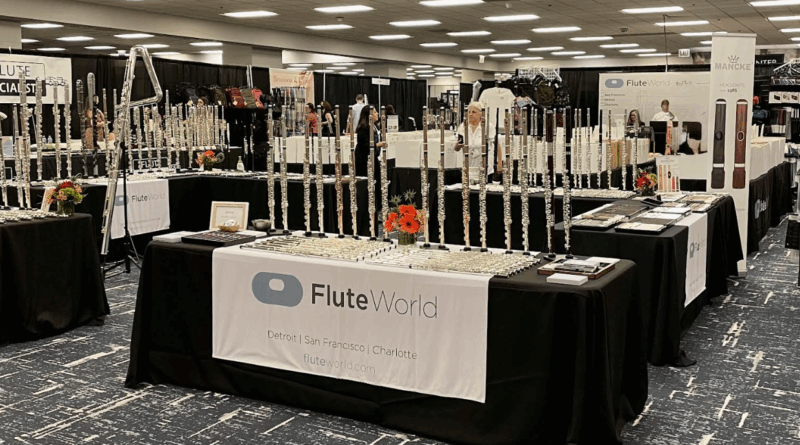
NFA 2025: How to Navigate the Exhibit Hall Like a Pro
by Sarah Hollandsworth
If you’ve ever walked into the exhibit hall at the National Flute Association’s annual convention (or any major flute show) and felt your heart race with equal parts excitement and overwhelm, you’re not alone. Whether you’re a first-time attendee or a seasoned pro, the exhibit hall can be both a flute lover’s paradise and total sensory overload. Dozens of booths. Thousands of instruments. Rows of accessories, sheet music, and gadgets you didn’t even know existed. It’s easy to get swept up in the experience and walk out hours later wondering what just happened.
As someone who spent over a decade designing and managing exhibit booths for brands such as Altieri, Beaumont, Bulgheroni Piccolos, Flute World, and J.L. Smith at NFA and other major trade shows, I’ve had a front-row seat to the joy, wonder, stress, and sheer volume (pun intended) of foot traffic that floods these spaces. I’ve also seen what makes for a smooth and memorable experience, both for the flutists walking the aisles and the vendors behind the tables.
Whether you’re there to try headjoints, upgrade your instrument, stock up on sheet music, or simply soak in the energy of the flute community in full bloom, here are a few tips to help you navigate the exhibit hall with clarity, purpose, and maybe even a little flair.
Have a Game Plan but Stay Curious
Before you set foot in the hall, take a few minutes to glance at the exhibitor list and floor plan. If you know you want to try specific instruments or visit certain companies, make a short list of must-sees. The exhibit hall can be a bit of a maze, so knowing who’s where and what matters most to you will save time and energy.
That said, leave room for spontaneity. Some of the most exciting discoveries come when you stumble upon a brand you’ve never heard of or a product you didn’t know you needed. Think of your plan as a compass, not a cage.
Try Instruments Strategically
Conventions offer a rare opportunity to experience a wide range of flutes, piccolos, and headjoints in one place. It’s tempting to want to try everything at once, but your chops and your ears will thank you if you pace yourself.
Bring your own sheet music or excerpts you know well so you can compare instruments consistently. Even if you’re not buying right now, use the time to explore what’s new, discover lesser-known brands, and gather ideas for student recommendations.
If you are seriously considering a purchase, ask about private appointments or the option to trial instruments overnight. This gives you valuable alone time with the instruments, away from the noise and energy of the exhibit hall.
Ask Questions and Take Notes
When trying multiple flutes or headjoints, take notes (on paper or your phone) about the models and what you liked and didn’t like about each one. Trust me, after a few hours, everything starts to blur together. Ask about pricing, trial policies, and maintenance/repair packages. Some companies offer special discounts or promotional financing on purchases finalized at the show.
If you’re a teacher, studio owner, or influencer in the flute community, it’s also worth inquiring about educator programs or affiliate opportunities.
Respect the Space and the Staff
Exhibitors put an enormous amount of effort into preparing for these shows: building and transporting booths, organizing inventory, and showing up with a smile, even after standing for more than 10 hours a day. Remove your rings before handling instruments. Treat displays with care and always ask before opening cases or taking flutes from trays and pegs. Be sure to sanitize any instrument you try using the disinfectant provided. Rubbing alcohol works well for metal instruments but is damaging to wood.
And of course, don’t hesitate to introduce yourself! Many staff members are flutists, too, and they’re delighted to connect.
Time Your Visit Wisely
Prepare for the long haul. Hydrate! Bring a snack, maybe earplugs. Wear comfortable shoes. You’ll likely be walking, talking, and playing more than you expect.
The exhibit hall tends to be busiest right after major events and popular masterclasses. If you’re hoping for a quieter environment to try instruments or have deeper conversations, schedule your visit during off-peak times. When the exhibits close at the end of the day, respect the vendors and their staff by exiting the hall in a timely fashion.
Network Naturally
Trade shows aren’t just about shopping; they’re about connection. Don’t be shy about introducing yourself to company reps, artisans, and fellow flutists. Many of the conversations I’ve had “in the booth” have turned into friendships, collaborations, and future opportunities. Just be genuine! You don’t need a perfect elevator pitch, just curiosity and kindness.
Don’t Forget the Small Stuff
Beyond instruments, the exhibit hall is the perfect place to stock up on essentials: cleaning rods, cases, stands, sheet music, and more. Retailers bring their newest titles and best-selling items to NFA. If you’re unsure where to start, ask for recommendations based on your playing level, interests, or what’s trending in the repertoire right now.
A Final Note
The exhibit hall isn’t just a marketplace. It’s a microcosm of the flute community in all its variety and vitality. Whether you leave with a new flute, a new friend, or simply a few more ideas about what’s possible, consider your visit a success. Take a deep breath and enjoy!