Jaume Darbra Interviews Flute Maker Alfred Verhoef
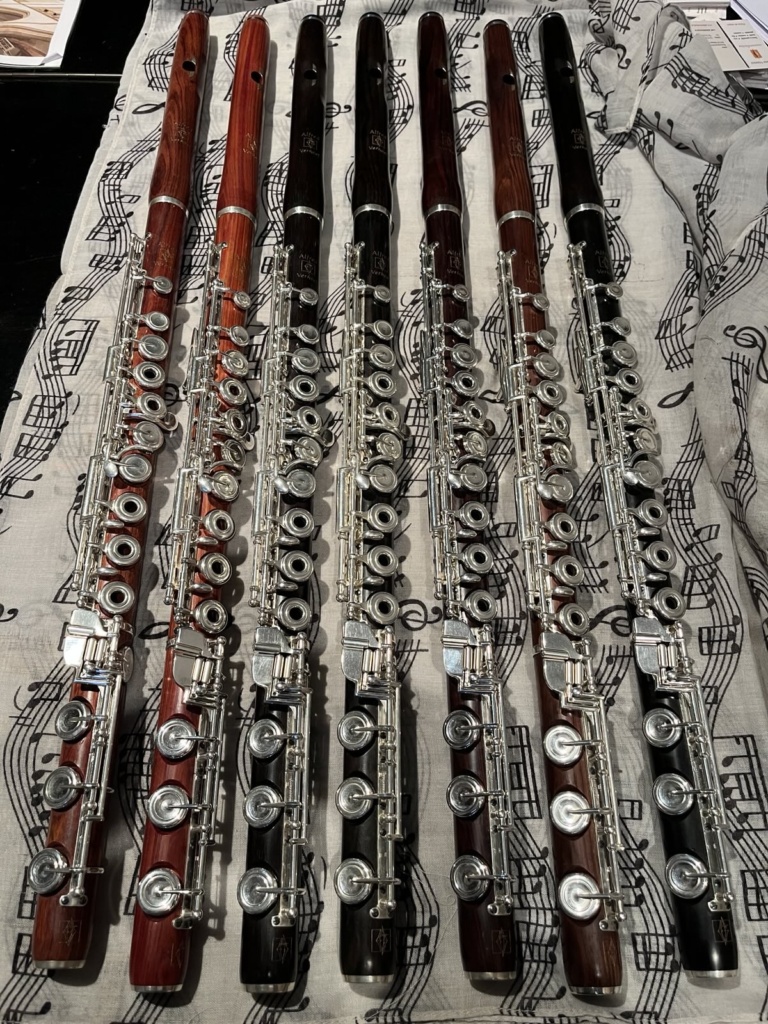
Alfred Verhoef is a distinguished maker of wooden concert flutes based in Alkmaar, the Netherlands, with over 25 years of experience crafting flutes and head joints. His journey began after a profound moment on his sailing boat in 1982 when he realized the warm, rich tonal qualities he sought could only be achieved with wood rather than metal. Verhoef works with seven types of wood, including African blackwood, cocus, coromandel, palisander, and various rosewoods, each offering unique tonal colors. His meticulously handcrafted flutes are known for their pure sound, strong projection across registers, and unique tonal palette, making each instrument one-of-a-kind. Beyond craftsmanship, he blends traditional techniques with modern precision, continually refining his flute mechanisms for stability and playability. His flutes are highly regarded among professional musicians in Europe and are showcased at prominent events, reflecting a legacy of innovation and dedication to wooden flute making.
After years of searching in silver and gold, you’ve said “the sound I was looking for” was discovered in wood. Can you describe that turning point? What did you hear and feel in wood that metals couldn’t provide?
That realization came to me in 1982, aboard my small sailing boat on the Atlantic. The wind had died and, surrounded only by open water and sky, I played some Bach on my metal flute. Without walls or ceiling, there was simply no acoustic environment—yet I felt something missing even beyond that. It was then that I understood the inherent limitation of metal and the possibility of something more organic and resonant in wood. It’s a story I’ve shared in more detail on my website, but that moment shaped my path from then on.
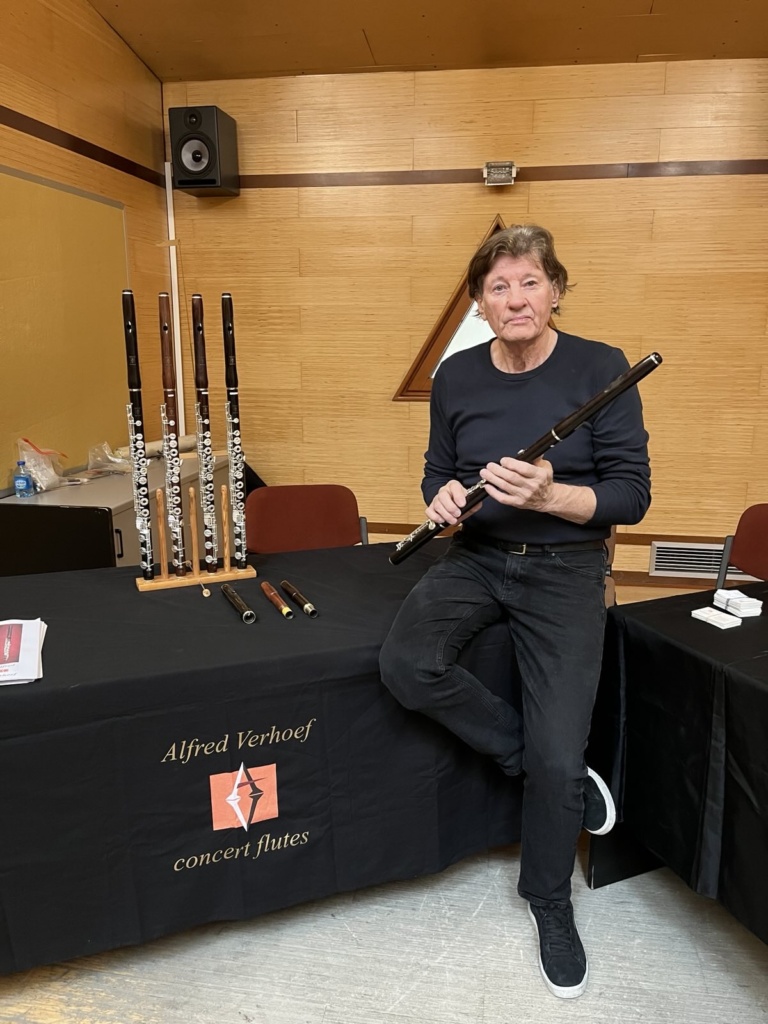
What are the critical material parameters in your decision-making? How do cocus, palisander/rosewood, African blackwood, or coromandel each affect your choices about flute diameter?
Three main factors matter in selecting wood: specific gravity (density), visible grain structure, and the sound each piece promises. It requires years of training to predict which beam of wood will make a great flute—you can only truly tell after crafting a full instrument. Another essential point: the wood has to “rest” for at least 10-15 years, naturally dried, before it’s suitable. Today, climate change has made high-quality wood harder to find. Luckily, my workshop still has wood aged between 20 and 120 years, selected long ago—enough to last me for many more flutes.
Regarding diameter, the denser the wood (like African blackwood), the thinner the walls can be before losing vibrancy; less dense woods need thicker walls to sing. Blackwood, cocobolo, and cocus demand relatively fine tolerances, while palisander and rosewoods (like Bahia and bubinga) need more volume for optimal resonance. Too thin, and even blackwood approaches a “metal” sound; too thick, and lighter woods sound dull. Ultimately, the flute’s right thickness is something one feels—the instrument vibrates perfectly under the fingers.
In precise flute-making, how do you avoid letting micro-adjustments cascade into compensations elsewhere? How do you know when to stop?
I started flute-making with plenty of measurements—Fourier analyses, frequency checks—documenting subtle differences between instruments. Then, a respected professor advised: “Use your ears!” With years of classical singing behind me, my ear became my most trusted tool. While measurements and analysis still have their place—especially for learning from science and avoiding known errors—there’s a point where reliance on ear and feel guides fine tuning. In practice, using both approaches yields the best results, especially since certain phenomena (like Boehm’s overlooked effect of the “virtual tube”) only emerge in actual play.
 You’ve noted that even three “identical” professional wooden flutes can have different intonation scales, and that a perfectly “pure” flute doesn’t exist. How did you settle on your own compromise?
Over years of measuring and annotating countless flutes, I hoped to find a perfect solution, but always found variations. Research confirmed what I experienced: even flutes of the same brand and model could differ, and flutists themselves each bring individual compensations to a new instrument. After raising a note based on one player's suggestion, another player soon commented that it was now too low. Ultimately, through thorough playtesting, I arrived at a scale that required fewer and fewer adjustments. I consider this scale to be the best solution, and both I and many players are now very happy and satisfied with it.
In 2020 you introduced a pinless mechanism with hardened axles and precision adjustments—solving what issues, and what’s still uniquely challenging in marrying a stable mechanism to a living wooden tube?
Wooden flute tubes react very little in length—less even than metal—though radial change with humidity and temperature is natural. Properly aged hardwood (20+ years) is remarkably stable. The air, not the material, is what drives tuning variation with temperature. The greater technical challenge was creating a mechanism that remained precise and reliable over time. That’s why I redesigned the mechanism—testing, hardening, and finally perfecting the silver keys through extensive experiments and computer simulations.
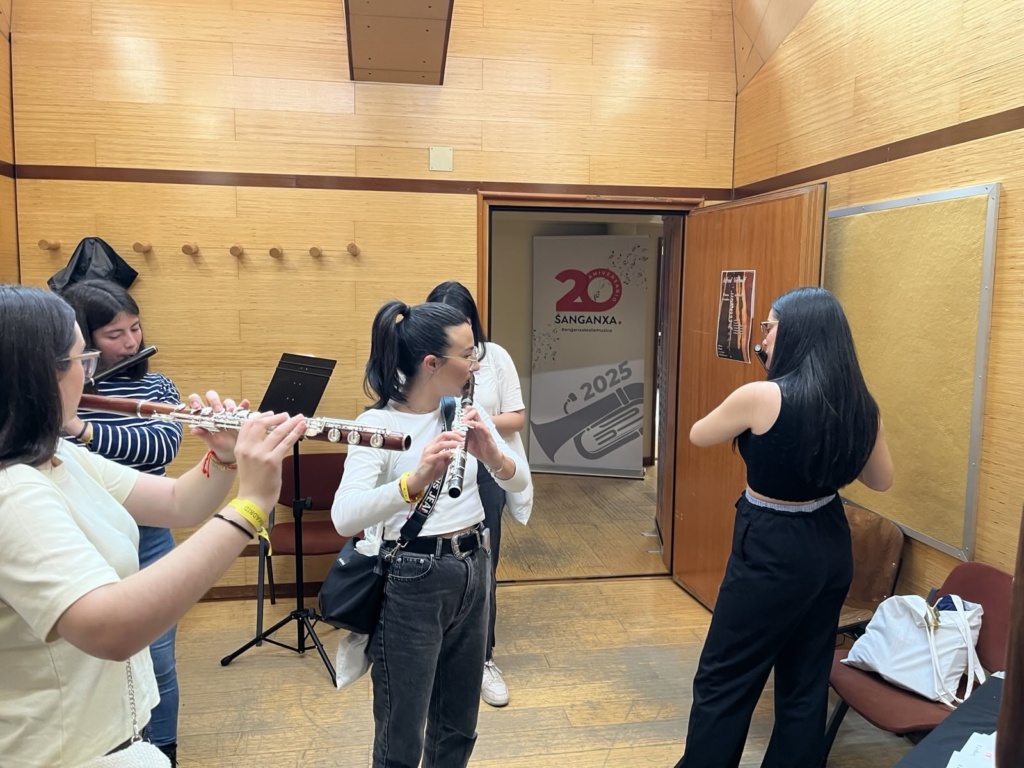
When players visit your workshop or try flutes at conventions, how do you guide their selection process among woods?
I lay out flutes made from the full palette of woods, and let each player try them—without saying which is which. After they form their impressions, I’ll share my own thoughts, if asked. Sometimes I’ll note which flutes are more “played in” and therefore easier or more resistant at that moment. By the end, there’s almost always a clear choice: sometimes it feels as if the flute chooses the player as much as the other way around.
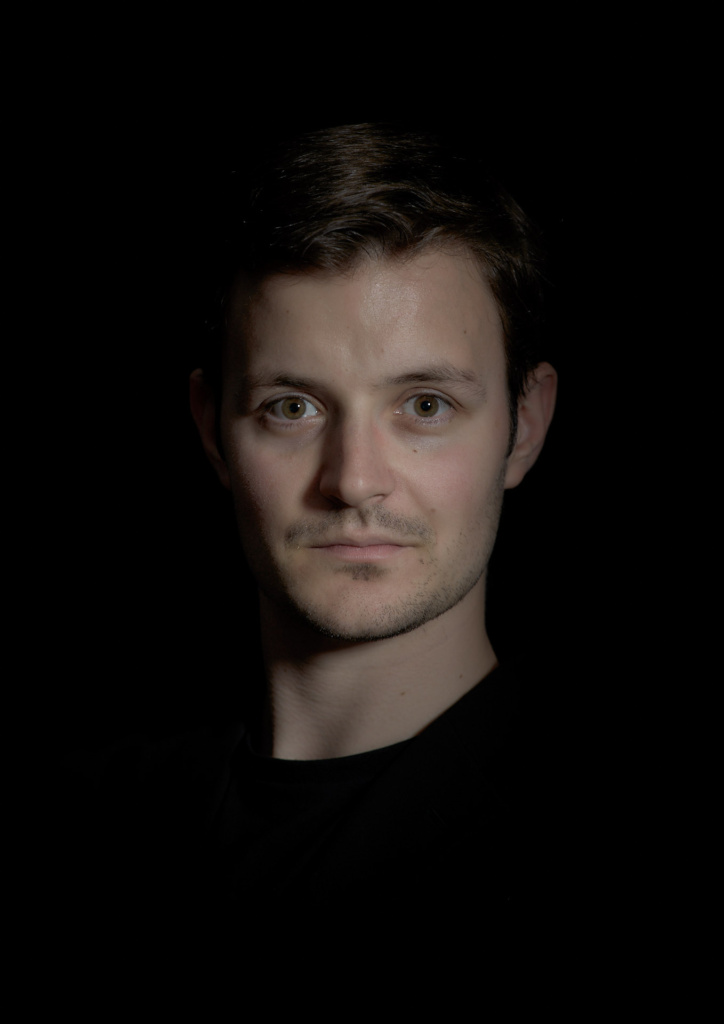
Jaume Darbra is a multidisciplinary, independent artist based between Cologne and Murcia, renowned for his international performances as a flutist at contemporary music and visual arts events across Europe, the Americas, and Asia. He collaborates with leading festivals, institutions, and orchestras, and works with prominent figures such as Patricia Kopatchinskaja and Marina Abramović. Dedicated to contemporary music, he premieres works by diverse composers and performs with top ensembles. Jaume studied in Barcelona and Amsterdam, and is pursuing a PhD exploring inclusive music education for the deaf. He is also a critic, podcast host, and collaborator with music industry innovators. He is an Alfred Verhoef artist.