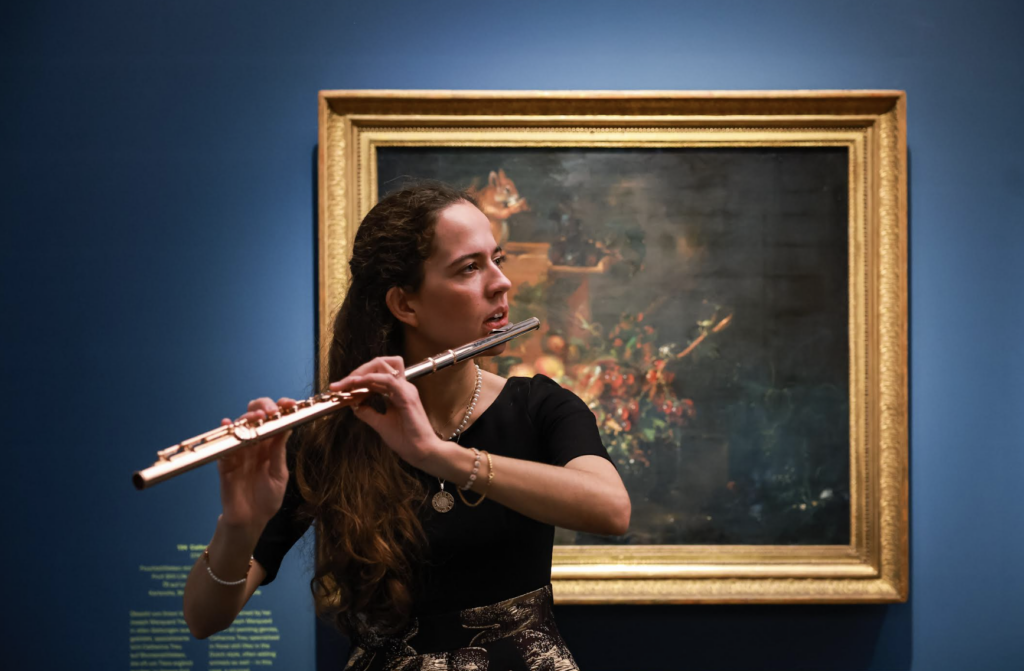
Warming Up the Whole Body: Rethinking Preparation as Flutists & The Resonating Body Festival in Italy
by Katharina Martini
Warming Up the Whole Body: Rethinking Preparation as Flutists
For many flutists, warming up is something we know we should do, but in reality, it often becomes a quick routine, squeezed in between other commitments or reduced to a few familiar exercises.
But what if warming up is not just preparation, but already part of the music-making itself?
A good warm-up does more than prepare the fingers. It invites the whole body into the process. From a physical perspective, warming up means quite literally what the word suggests: increasing circulation, activating the muscles, and bringing mobility into the joints. For flutists, this especially includes the shoulders, arms, and fingers, but it should not stop there.
When we begin to include the whole body, even something as simple as activating the legs, something shifts. We start to resonate. The sound can become more grounded, more connected, sometimes even freer. The body starts to organize itself differently, posture becomes less forced and more activated from within.
In my own practice, I’ve noticed that even really small changes in how I prepare physically can have a surprisingly strong effect on how I play, not only technically, but in terms of sound quality, resonance, focus, and ease.
This is why a more holistic approach to warming up can be so valuable. Gentle movement, shoulder circles, activating the arms, engaging the breath, all of these elements contribute not only to physical readiness, but to a different quality of attention.
Of course, not every day allows for a long and structured warm-up. But even small moments matter. A few shoulder rolls while making coffee, a couple of squats to wake up the body, a conscious breath, these small actions can already change how we enter our practice and, ultimately, how we sound.
Try this:
• 3 slow shoulder circles in both directions
• 5 deep squats
• standing on one leg for a minute (both sides)
• 3 conscious breaths before playing
Warming up, in this sense, becomes less about duration and more about awareness.
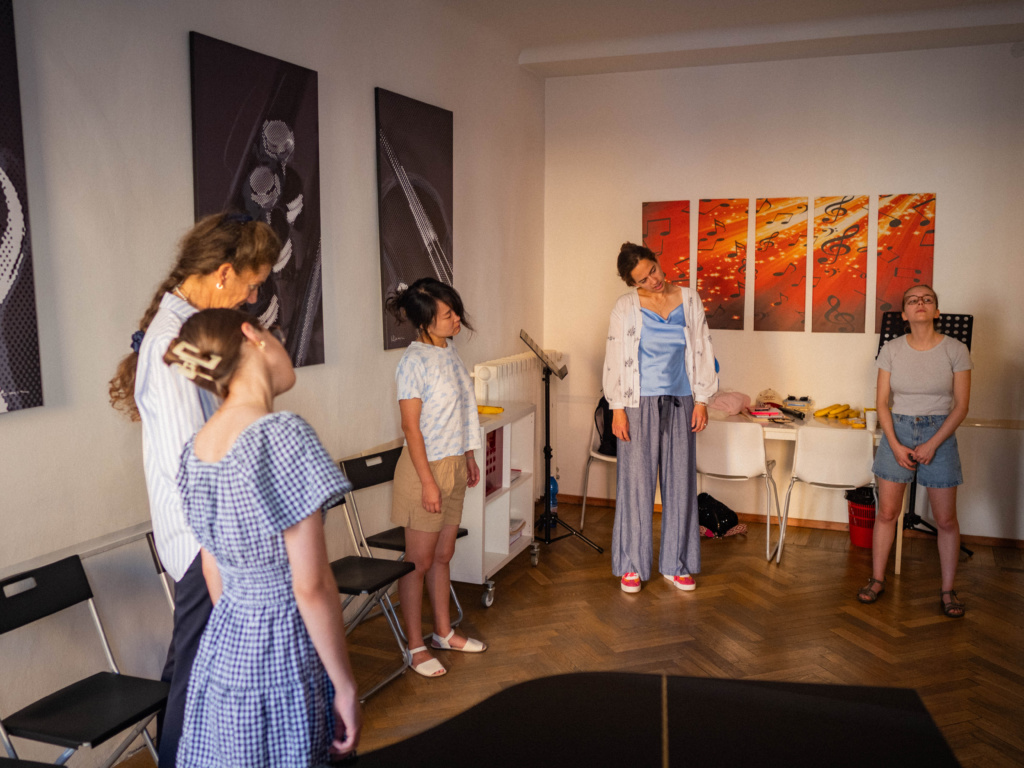
This idea is the core of the Resonating Body Festival, where daily guided warm-ups are an essential part of the experience. Each day begins with a one-hour session designed to help participants explore different approaches and discover what works best for their own body and practice. The goal is not to prescribe a single method, but to enable each musician to develop a personal, sustainable warm-up routine.
The festival itself takes place in two parts: in Verona (September 5–8 2026) and in Venice (September 10–13 2026) lead by the two flutists Katharina & Christiane Martini. Across both locations, participants engage in workshops about mindset and body, chamber music, and performances, while also sharing the experience of making music together in an international group of flutists. Many ways will guide the musicians to a personal way of resonance.
Among the highlights are workshops connected to the Resonance Composition Prize, a session with film director and screenwriter Victor Martini, and in Venice, a workshop with Nicola Mazzanti on his approach to piccolo playing, as well as a session on social media and marketing for the 21 century musicians with Gill Derer.
At the same time, the festival is not only about structured learning, but about exchange, conversations, good Italian food, and the experience of making music together in different spaces and contexts.
For those who cannot attend in person, the Resonating Body Online Festival offers a parallel experience. Participants can access guided warm-ups, workshops on body awareness, posture, injury prevention, mindset, and stage presence, as well as additional sessions and materials.
A workbook accompanies the online program, offering structure and space for reflection. There is also the possibility to join live sessions and, in a limited format, to book individual 1:1 lessons.
In both formats, live and online, the underlying idea remains the same: to approach music-making not only through technique, but through the body as a whole.
In this context, resonance can be understood as more than an acoustic phenomenon. It emerges in the relationship between body, sound, space, and perception — in the way we listen, respond, and allow ourselves to be affected by what we hear and feel. Resonance continues in resonating with ourselves as well as our colleagues and our audience.
Perhaps this is where warming up begins to change its meaning. Not as a preliminary step before “real” practice, but as a space where listening, awareness, and sound already start to unfold.