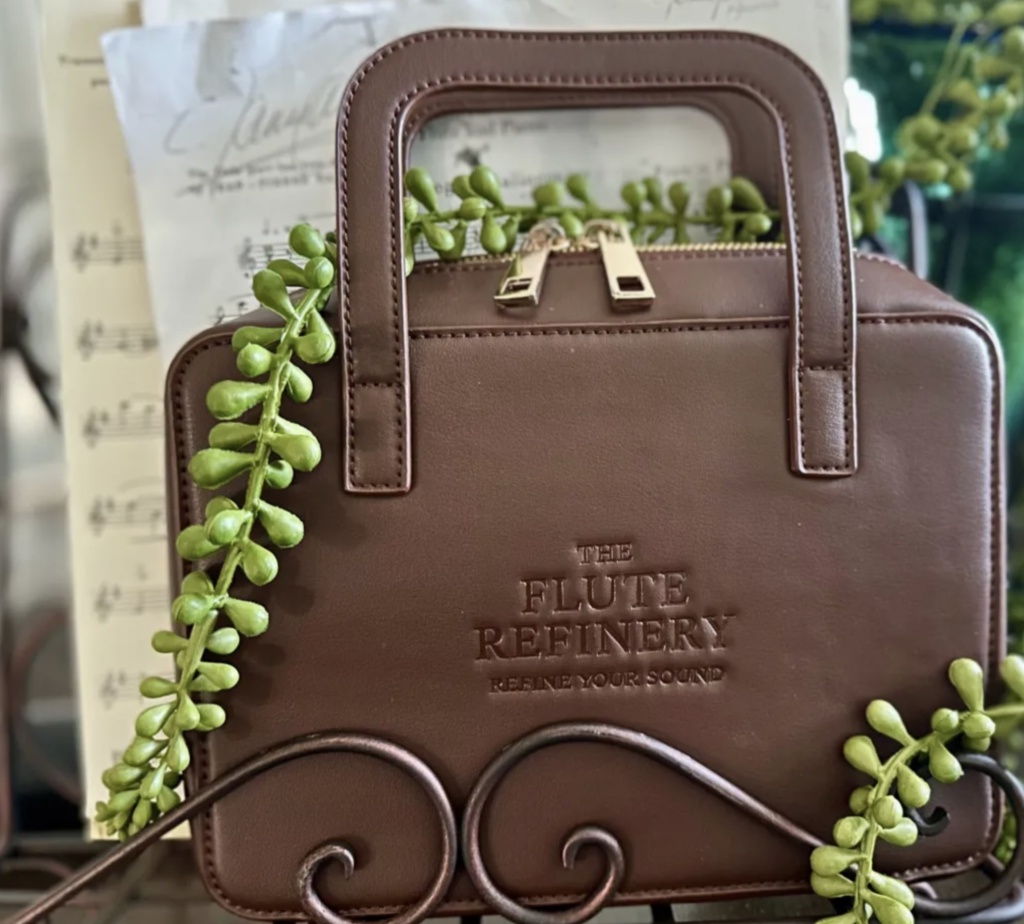
A New Approach to Flute Care: Jennifer Baunoch Introduces The Flute Refinery Essential Care Kit
For many flutists, instrument maintenance can feel mysterious, left largely in the hands of technicians until something goes wrong. Jennifer Baunoch is working to change that. Drawing on her wide-ranging experience across the flute world, she has developed a mission centered on helping players better understand their instruments, respond to minor issues with confidence, and cultivate a deeper connection to the mechanics behind their artistry.
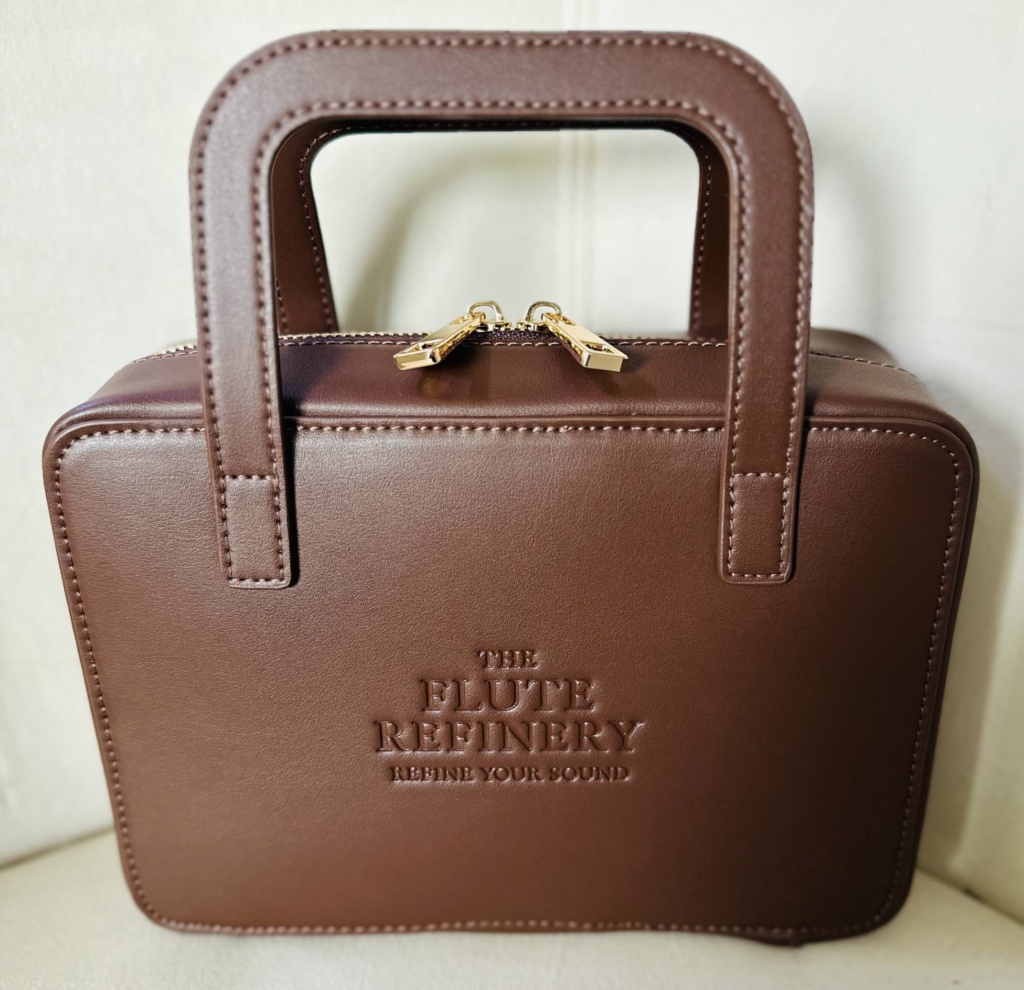
At the heart of that vision is The Flute Refinery Essential Care Kit, a practical and innovative resource designed for students, educators, and professionals alike. More than a toolkit, it is an educational concept—one that empowers players to handle everyday care, address small problems in the moment, and better recognize when professional attention is needed. Complemented by Jennifer’s virtual refinement work and expanding educational resources, the project reflects a broader philosophy of making flute care approachable rather than intimidating.
Created in collaboration with Fluterscooter, who designed the bag itself, the Essential Care Kit embodies Jennifer Baunoch’s belief that greater awareness of one’s instrument can lead to greater confidence in performance. In this interview, she shares the ideas behind The Flute Refinery, the inspiration for her work, and her vision for helping players refine not only their instruments, but their relationship with them.
You’ve had a remarkable journey through companies like Gemeinhardt, Conn-Selmer, and Wm. S. Haynes Company. What first drew you into the world of flute making and refinement?
I always thought I would become a professional flutist. Like so many young players, Sir James Galway was the model for what that path could look like. I grew up in a musical family, played constantly in settings like church, and was fully immersed in music through school. I even had the opportunity to perform at Carnegie Hall with my high school orchestra, which was a defining experience.
But when I entered a very competitive performance program at DePaul University, I realized that path wasn’t the right fit for me. I stepped away, moved back to Elkhart, started a family, and unexpectedly found my way into instrument making when my high school band director connected me with an opportunity at Armstrong flutes as a flute tester.
That experience opened up an entirely new world. I was trained by highly skilled artisans who had learned directly from the original makers in Elkhart, and I quickly realized that testing a flute is very different from playing one. I had to relearn how to approach the instrument in order to properly evaluate it, and that shift changed everything for me.
That was the moment I realized there was an entirely different side of the instrument that I hadn’t understood before, and it drew me in immediately.
Was there a pivotal moment in your career when you realized your work would center on helping players “connect” with their instruments?
I think that started to take shape when I attended my first National Flute Association conventions in the late 1990s. At the time, I was still very new, both as a player within the broader flute community and in my role in manufacturing. Walking into the exhibition hall for the first time was overwhelming in the best way. I was in awe. Rooms filled with instruments, so many makers, so many approaches to design. It felt like stepping into the full world of the flute for the first time.
At the same time, I had the opportunity to meet and learn from some extraordinary people. Roy Seaman was still alive then, and I was fortunate to have a few meaningful conversations with him. He was brilliant, and being around that level of mastery left a real impression on me.
But the most pivotal influence was Richard Hahn, who was Professor Emeritus of Flute and former Director of the Hampton School of Music at the University of Idaho, and also a past president of the National Flute Association. At the time, I was working at Gemeinhardt, where he served as an advisor and would come to Elkhart to collaborate on research and development, helping to improve both design and quality. He had a deep understanding of both playing and the history and development of the instrument, and when he was there, we had conversations that I simply couldn’t have with anyone else in the building. At that time, even though we were producing flutes at a very high level and volume, there were very few actual flutists inside the manufacturing environment.
Those conversations made something click for me.
I realized I loved being in the middle of it all, being the person who could understand what a player was experiencing and translate that into something meaningful for the people making the instrument. I could speak both languages. I could take what I was hearing from flutists and turn that into something actionable for engineering and production, and vice versa.
That connection, between player and instrument, and between player and maker, became the part of the work that mattered most to me. That’s really where everything started to come into focus.
What inspired you to found The Flute Refinery, and what gap were you hoping to fill in the flute community?
Many years ago, when I was working from home while raising my children, I set up a small workshop in my garage. I had a bench, tools, and everything I needed, and I started buying used instruments on eBay, refurbishing them, and reselling them. That was actually when I first came up with the name “The Flute Refinery.”
Over the years, I held onto that name and continued to use it from time to time for contract work and individual projects. More recently, as I was going through some major transitions in my career and life, I started thinking more seriously about building something of my own. I wasn’t entirely sure what it would look like at first, but I knew I wanted it to be meaningful and rooted in the experience and knowledge I’ve built over time.
What became very clear to me is that there is a significant gap when it comes to helping players truly understand how their instruments function and how to respond when something doesn’t feel right. Many people don’t have access to a qualified flute technician nearby, and even when they do, there’s often a disconnect between what the player is experiencing and what’s actually happening mechanically.
That realization led me to the idea of offering virtual refinement sessions, where I could help guide players, parents, and educators through problem-solving in real time. But as I thought more about it, I realized that I also wanted to give people something tangible, something they could have in front of them to help support those moments when their instrument isn’t responding the way it should.
That idea naturally expanded into developing The Flute Refinery Essential Care Kit, and I knew early on that I wanted the bag itself to be done right. Fluterscooter immediately came to mind because of the quality and care Andrea Fisher puts into her work. I reached out to her with my ideas, and she was incredibly open to collaborating. We worked through the details together, and she and her team did a beautiful job bringing exactly what I had envisioned to life. It was a very natural partnership, and it means a lot to me that she believed in the idea and was willing to be part of it.
The Essential Care Kit allows me to offer both a resource and a level of support that extends beyond a single interaction. It’s designed to be something players can use on a regular basis to better understand and maintain their instrument. There are elements within the kit that support ongoing care, helping players stay more aware of how their instrument is functioning between regular technician checkups, which are typically recommended every six months to a year depending on the player and their usage.
At the same time, I want to be a trusted resource for helping people find the right next step, whether that’s working with a qualified technician, connecting with a teacher, or continuing to learn more about how their instrument works. My goal is to support players at every level, not just by fixing problems, but by helping them feel more confident and informed.
The name “Refinery” is evocative. What does refinement mean to you in the context of both the instrument and the artist?
To me, refinement is the ongoing process of shaping and revealing something into its most natural expression.
As musicians, we develop a strong sense of awareness, and it can be easy to place a lot of pressure on ourselves to be perfect. But I see refinement differently. Rather than striving for perfection, it’s an opportunity to open up, explore, and evolve. Over time, that creates a more natural and refined way of playing that feels more connected and more authentic.
When I think about refinement, I think about exploring music rather than controlling it. Yes, you still have to practice, develop consistency, and play what’s on the page. But beyond that, it becomes about expression. It’s about becoming more connected to what you’re trying to communicate as an artist.
Refinement is an ongoing process. It’s paying attention, staying engaged, and allowing your playing to evolve in a way that feels whole rather than perfect.
That idea applies just as much to the instrument. A flute doesn’t need to be perfect in some rigid sense. It needs to function in a way that allows the player to express themselves fully. Small adjustments over time can completely change how an instrument responds and how a player connects with it.
To me, refinement is a positive word. It feels creative and fluid. It reflects the idea that we’re always learning, always adjusting, and always evolving into something that feels more natural and more true to who we are as musicians.
How do your virtual refinement sessions work, and what surprises clients most about that process?
The sessions typically start with a conversation about what the player is experiencing. They’ll describe the issue, and then once we’re on a video call, I have them play and show me exactly what’s happening.
From there, I guide them through a series of questions and observations so I can start narrowing down whether the issue is mechanical, related to playing technique, or a combination of both. I’ll have them show me specific things, try small adjustments, or approach the instrument a little differently so I can see what’s actually going on.
In some cases, I can walk them through very minor corrections that get them back to playing quickly. In other situations, I’ll tell them not to touch anything further and help guide them toward the right repair solution. Every situation is different, so it really becomes a process of problem-solving in real time.
What surprises people most is how quickly something that seems like a major issue can turn out to be very simple. For example, a loose adjustment screw can completely stop a note from speaking, and it can make the instrument feel like something is seriously wrong. Then with a very small correction, sometimes in just a few seconds, the flute is functioning again.
The other surprise is that this can all be done virtually. Most people don’t expect that level of clarity and resolution to come through a video call, but once they experience it, it changes how they think about getting help with their instrument.
What advice would you give to young flutists about maintaining and understanding their instruments?
This is a difficult question to answer briefly, because the flute is a very intricate instrument, and proper care is something that really needs to be shown, not just explained.
The most important advice I can give is not to assume that taking it apart and putting it back together is something you’ll automatically know how to do correctly after being shown once. It actually takes repetition and awareness to handle the instrument properly without causing damage.
I strongly recommend that young flutists and their parents spend time with a qualified flute instructor, even if it’s just for a few sessions, specifically to learn how to assemble, disassemble, and handle the instrument correctly. Having someone there to give real-time feedback is extremely important, because small mistakes can easily lead to bent keys or other issues without the player realizing it.
Videos can be helpful, and pairing them with real-time feedback helps you understand how you’re doing and feel confident that you’re handling the instrument properly.
Understanding how delicate the instrument is, and taking the time to learn how to handle it properly, can prevent many of the problems that players later assume are “playing issues,” when in reality they are mechanical.
Your work seems deeply rooted in care and connection. How do you define your mission as a craftsperson and entrepreneur?
For a long time, there has been a mindset that flute players should stay away from understanding how their instrument works and leave that to someone else. I see it differently.
The more you understand about your instrument, the more confident you become, and the deeper your connection to it. I hear the question all the time, “Is it the flute or is it the player?” In reality, both matter more than people realize. The instrument has to function properly to support the player, and the player needs awareness to recognize when something isn’t working as it should.
Learning to play the flute is already a complex process. You’re learning fingerings, embouchure, tone, dynamics, expression, and so much more. But what often gets overlooked is that every flute, whether it’s a beginner instrument or a high-end handmade one, has gone through an equally complex process to be able to function at all.
There is an incredible level of thought, design, and skill that goes into making a flute playable. Even in large-scale manufacturing, there are highly trained people assembling, adjusting, and finishing these instruments with precision. It’s a different set of skills than handmade work, but it’s still highly skilled, and it deserves respect.
As my career progressed at Gemeinhardt, I moved into leadership roles, first as Director of Marketing. That was a pivotal time, because it was when I began working more directly with artists and really understanding how to translate what they were looking for into something tangible within the instrument itself.
One of the first and most meaningful examples of that was my work with Ali Ryerson. We developed a strong working relationship, and she was incredibly open in sharing what she needed from an instrument. That experience helped shape how I approached collaboration going forward, listening carefully, understanding the nuances, and then translating that into something the manufacturing team could actually execute.
As the company continued to grow and evolve, I stepped into the role of Executive Vice President and COO. Even at that level, we were a very hands-on team. I continued to spend time in the factory, testing instruments and working directly with our makers. I also worked closely with the company’s president, David Pirtle, in a very collaborative and practical way, combining his work on the manufacturing side with my testing and feedback so we could refine and improve the instruments in real time.
During that period, I was deeply involved in the development and refinement of the Roy Seaman piccolo line, including naming the Storm piccolo and helping guide its positioning. That work gained recognition from highly respected piccolo players such as Peter Verhoyen, Jennifer Gunn, and Nicola Mazzanti, which was incredibly validating.
Another defining chapter was working with Sir James and Lady Jeanne Galway. That relationship began during my time as Director of Marketing and developed into a collaboration focused on creating high-level instruments that were also more accessible.
One of the most meaningful moments of my career was being part of the development of what became the Galway Crusader headjoint. I also named the Crusader, which came from spending a great deal of time deeply understanding Sir James, his legacy, and what he and Lady Jeanne Galway were working to accomplish. That process of listening, researching, and really paying attention to their mission shaped not only the name, but the direction of the product itself.
I had the privilege of being the final person to test it before it was presented for approval. Later, watching him perform at the Kennedy Center, playing first on his platinum Nagahara and then returning in the second half on a Gemeinhardt flute with that headjoint, was a full-circle moment I will never forget.
My mission is to help close that gap in understanding. I want players to feel more connected to their instrument, not intimidated by it. Because when you understand even a small part of how your flute works, it changes how you care for it, how you respond to it, and how you play it.
That’s also where The Flute Refinery Essential Care Kit comes in. It gives players a way to be more aware and more proactive with their instrument, to handle minor situations with confidence, and to better understand what’s happening between regular maintenance.
At the end of the day, it’s about connection, confidence, and giving people the tools and knowledge to take ownership of their playing experience.
What continues to inspire you after so many years in the flute world?
What continues to inspire me are the people who believed in me early on and took the time to share their knowledge and encouragement in ways that truly shaped my path.
When I was a young teenager, just starting to advance in my playing, there was a gentleman from our church, Al Singleton, who was an executive at Armstrong flutes. One day after church, he pulled me aside and gave me my first open-hole flute. I had been playing on a beginner instrument, and this was something I never expected. He told me that it was important to him to support young people in their musical journey because they could make a difference one day.
At the time, I thought that meant becoming a better player. I didn’t realize he was speaking more broadly about the industry itself and the future of instrument making. He also loaned me a signed copy of a book by Albert Cooper, and I remember how excited he was to share it with me. I was so excited too, even though I didn’t fully understand it at the time. That moment stayed with me in a very deep way.
Years later, when I was working with the original Amadeus team at Haynes, I had the opportunity to work closely with Emerson DeFord in a very unique way. At that time, we were building the first Amadeus flutes, and we were actually working out of Emerson’s manufacturing facility. He was serving as a consultant on the project, and that environment created a rare opportunity to learn directly from him while we were developing those instruments.
He had a small bench set up in the corner of his shop and continued building flutes well into his later years. He started teaching me about headjoint making and would ask me to play instruments and give him feedback.
At one point, he told the president of Haynes, “She knows what she’s talking about.” That meant a great deal to me. He had such a deep understanding of the instrument, and to have that kind of confidence from someone like him was incredibly meaningful.
He also had a way of celebrating the process. When something worked well, he would light up and say, “See, this is how you make a headjoint.” That joy and pride in the craft left a lasting impression on me.
Emerson’s influence extended far beyond his own work. He mentored a number of highly respected flute makers, including Bickford Brannon, Jack Moore, Tom Green, and Emmanuel Arista, all of whom went on to become known for their high-end flutes and headjoints. Being in that environment and witnessing that level of craftsmanship and mentorship firsthand was incredibly influential.
Emerson later gifted me a flute that he had made, and I had the honor of speaking about him when he received a Lifetime Achievement Award from the National Flute Association. Having Ali Ryerson perform on that flute during that moment was something I will always carry with me.
Those experiences, and the people behind them, continue to inspire me. They remind me of the importance of mentorship, of sharing knowledge, and of supporting the next generation in a meaningful way. That’s something I try to carry forward in my own work.
If every flutist could understand one thing about their instrument, what would you want it to be?
If every flutist could understand one thing, it would be how much their instrument is actually affecting what they’re experiencing when they play.
So often, when something doesn’t respond the way it should, whether it’s a note not speaking, resistance, or inconsistency, the immediate assumption is that it’s the player. And while sometimes it is, a lot of the time there are small mechanical things happening in the instrument that the player isn’t aware of.
What I see all the time is players working much harder than they need to. They’re pressing their keys harder, using more air, creating tension, and trying to compensate for something that isn’t functioning the way it should. Over time, that becomes their normal, and they don’t even realize how much extra effort they’re putting in just to make the instrument respond.
The reality is that something as simple as an adjustment screw that needs to be tightened, or a key that isn’t moving freely, can completely change how a flute feels and responds.
When a player experiences an instrument that is properly set up and functioning the way it’s meant to, it can be a bit of an awakening. It changes their sense of ease, their sound, and their overall connection to the instrument.
That level of awareness is what I think is missing for a lot of players. And once you have that awareness, everything else starts to shift, from how you play, to how you care for your instrument, to how you respond when something doesn’t feel right.
And that’s really the reason behind what I’m building. To give players a way to better understand what’s happening with their instrument, to recognize when something is off, and to have the confidence and the right tools to address minor issues or know when it’s time to seek out a professional.
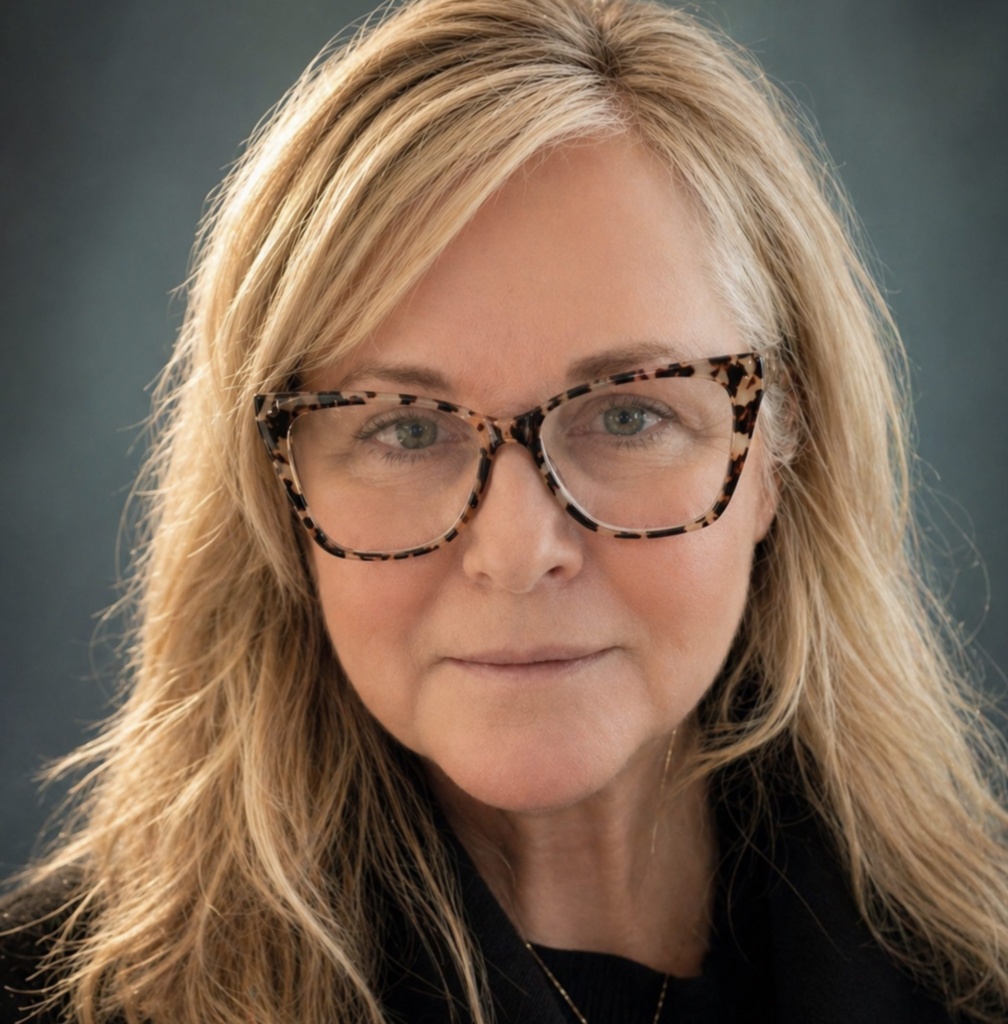
Jennifer Baunoch is an industry veteran with extensive experience in flute manufacturing, product development, and artist collaboration, including leadership roles across major flute manufacturers, including at the executive level. Her work bridges the gap between player and instrument, combining hands-on technical knowledge with a deep understanding of musical performance. She is the founder of The Flute Refinery, where she offers the Essential Care Kit and virtual refinement sessions focused on helping players better understand and care for their instruments.