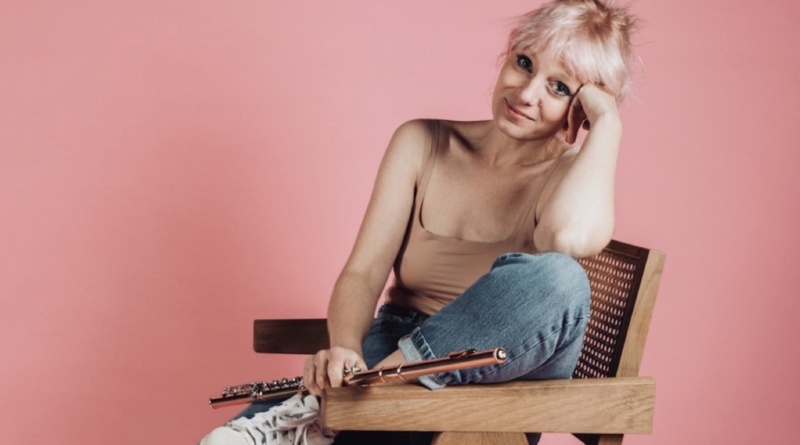
Flute Societies and Their Music: POLAND with Ania Karpowicz
compiled by Natalia Jarzabek
The Golden Age of the Polish Flute: A Conversation with Ania Karpowicz Poland has quietly become a global powerhouse for flute performance. From the widespread network of music schools in small towns to the elite academic centers in major cities, the country’s educational infrastructure produces a consistent stream of world-class talent. Names like Marianna Julia Żołnacz and Tomasz Sierant are now fixtures on the international stage, supported by a community that thrives on events like the International Flute Competition in Krakow, the Polish Flute Meeting, Tarnovia Flute Summer and the digital hub Fletowisko. Polish flute music didn’t start yesterday. While it found its footing in the Romantic era with Chopin and Dobrzyński, it blossomed through the 20th century. From that point on, composers eagerly employed the flute as a solo instrument in their compositions, including Tadeusz Szeligowski, Andrzej Panufnik, Mieczysław Weinberg, Robert Muczynski (a composer of Polish descent active in the US), Wojciech Kilar, Marcel Chyrzyński, and, of course, Krzysztof Penderecki. To explore the depth of this tradition and its future, we spoke with Ania Karpowicz—a flutist, curator, and activist who has premiered over one hundred new works and was recently honored with the prestigious title of the Forbes Magasine - ‚Woman of the Year 2025’.
Could you provide a short characteristic of Polish musical culture—some interesting facts, including when compositions for the flute first appeared?
A fun fact from my early years: I had the pleasure of premiering Sonatina for flute and piano by Wojciech Kilar—a work originally composed in 1951 and edited and published by Polskie Wydawnictwo Muzyczne more than thirty years later. That experience proved formative. More than one hundred premieres followed, and bringing new music to life gradually became my personal mission. Just as Fryderyk Chopin is known as a Polish composer in exile, there are many other émigré composers whose Polish roots are not immediately obvious. One of the closest to my heart is Mieczysław Weinberg, who left us two brilliant Flute Concertos as well as outstanding chamber works featuring the flute. I am particularly happy to bring Weinberg’s legacy back to his hometown of Warsaw, for example, through my curatorial work with the WarszeMuzik Festival.
Among other 20th-century Polish émigré composers, there are remarkable flute works by Andrzej Panufnik (the enchanting Hommage à Chopin), Roman Palester, Aleksander Tansman, and Witold Szalonek. I had the pleasure of making the world-premiere recording of Szalonek’s Concertino for Flute and Orchestra , which was awarded the Fryderyk Award in 2024. Among Polish composers active today, I would especially like to highlight a beautiful and deeply meaningful recent commission by Paris-based composer Elżbieta Sikora. She has written a Flute Concerto dedicated to Belarusian democratic activist, political prisoner, and outstanding flutist Maryja Kalesnikawa. The work was completed shortly before Maria was freed from prison by the Lukashenko regime: The concerto was co-commissioned by the Württembergische Philharmonie Reutlingen, the Opéra Orchestre national Montpellier Occitanie, the Malmö Symphony Orchestra (Malmö Live), and the Lithuanian National Philharmonic. The score will be published by Polskie Wydawnictwo Muzyczne and prepared for its world premiere in April 2026 at the Mieczysław Karłowicz Philharmonic in Szczecin, with Ana de la Vega as soloist, followed by performances in Reutlingen, Vilnius, Montpellier, Warsaw, and Malmö. (Source: SONORA Music)
Why did you decide to focus specifically on commissioning new compositions for flute and orchestra?
When you choose the path of a pianist, you enter an ocean of repertoire, fully aware that even a lifetime will not suffice to absorb and perform all the masterpieces available. With the flute, the situation is quite different. The repertoire is relatively limited, and after many years of performing, commissioning new works becomes the most natural step. I am not focused on a traditional soloist career. Rather, I follow the stories I want to tell through music. Sometimes these stories require an intimate chamber setting; sometimes they demand the scale and color of an orchestra. Last year, for example, I created a program dedicated to Felicia Montealegre, the wife of Leonard Bernstein. It became immediately clear that an orchestra was essential in order to include Mahler’s Adagietto, Bernstein’s Halil, and a newly
commissioned flute concerto based on a poem by Edna St. Vincent Millay. Working with Sinfonia Varsovia, Bar Avni, and composer Aleksandra Kaca was an extraordinary experience. This example illustrates my approach: I follow the narrative of each project and choose the musical tools that best serve it. Instrumentation is never the starting point; storytelling is.
Are you performing these commissioned works frequently?
This is an excellent question, as it touches on sustainability. In my experience, the smaller the ensemble, the easier it is for a piece to live on. This is why many of my projects are realized in chamber music settings. For a symphonic orchestra, presenting a flutist as soloist is already a bold decision—unless it is Mozart. Programming a premiere by a living composer, especially a woman, can feel almost
radical (laughs). That said, I consciously balance my work, and I am not afraid of orchestral premieres, as the exposure they offer can be so valuable. Chamber and solo projects give me the greatest artistic freedom: fewer external pressures, a trusted team, and a joyful rehearsal process. Perhaps this is why I return to chamber music so often.
How do you select the composers you collaborate with?
Having worked with over one hundred composers across Europe and beyond, my criteria have evolved. Today, I look for three essential qualities: outstanding compositional skill, a deep understanding of the project’s narrative, and reciprocity. Establishing a collaboration—fundraising through my NGO (oto foundation), assembling the artistic and production teams—requires significant effort. Beyond creating a beautiful new piece, I value genuine engagement and shared responsibility.
How many pieces have you commissioned and performed to date?
Certainly more than one hundred, perhaps closer to two hundred. I have never counted precisely, but I average around twenty premieres per year, and this number has remained remarkably consistent.
Have these pieces been released? And if so, where can we find them?
Yes, many of them.
A brief selection includes:
Solo projects – TOVA
Orchestral project – Szalonek
● Contemporary music – Judge Me Again (KAIROS )
● Improvised music – Ave Virus (Hashtag Ensemble )
● 20th‑century repertoire – Mieczysław Weinberg
Could you share some interesting facts or details about your work with the Hashtag Ensemble?
The most distinctive aspect of Hashtag Ensemble is its egalitarian structure. Unlike the traditional model inspired by Pierre Boulez—an ensemble led by a dominant composer or conductor—Hashtag Ensemble functions as a music cooperative. Initiating and shaping its artistic agenda has been one of the most formative experiences of my career. It allowed me to explore creativity on many levels: concept albums (Ave Virus), concert formats (Superorganism), festivals (AżTak Festiwal), and even the creation of a permanent music venue in Warsaw. What began as a bottom‑up chamber group has grown into an established institution, and this experience continues to inform all my future artistic choices.
What are your other artistic activities and projects?
I take great pleasure in designing musical programs—even those in which I do not perform myself. There is simply more beautiful music than one flutist can handle (laughs). Together with pianist Marek Bracha, I founded the WarszeMuzik Festival, which will celebrate its 10th edition in 2026. In 2025, I launched a new international festival, DROGA DŌ, taking place in Poland, Lithuania, Israel, and Japan ( www.droga-do.org).
I am also active in the recording field. I have recently released SYRENA:RE, a concept album with Dominik Strycharski, and my upcoming solo album ma, dedicated to Japanese music for solo flute (Takemitsu, Fukushima, Fujikura, Hosokawa), will be released soon. Balancing classical, contemporary, and improvised music—alongside curatorial work—remains central to my artistic life.
What is your next goal in your artistic development?
Speaking at the beginning of 2026, my main resolution is to do less—but more consciously. This does not mean withdrawing from concert life, but rather being even more selective and focused. However, this year will include at least three album releases and the curatorship of at least two festivals.
Which compositions by Polish composers would you suggest flutists learn and perform?
I would particularly recommend the following works in traditional notation:
Mieczysław Weinberg – Flute Concerto No. 1
Krzysztof Penderecki – Flute Concerto
Andrzej Panufnik – Hommage à Chopin
Tadeusz Szeligowski - Sonata for Flute and Piano.
Useful links:
Solo projects – TOVA
https://open.spotify.com/album/2xI68jcyjehs2g9huQAobN
https://tova.ania-karpowicz.com/
● Orchestral project – Szalonek
https://open.spotify.com/track/0OmxjWwkNoXcpf7HacpgzJ
● Contemporary music – Judge Me Again (KAIROS)
https://open.spotify.com/track/0fIYwEtyitt4xyS7B4XN9R
● Improvised music – Ave Virus (Hashtag Ensemble)
https://open.spotify.com/album/3KD77Hnkohl6vT5DqZ5amN
● 20th‑century repertoire – Mieczysław Weinberg
https://open.spotify.com/album/496vxzf98cyG0Va7EaAehl