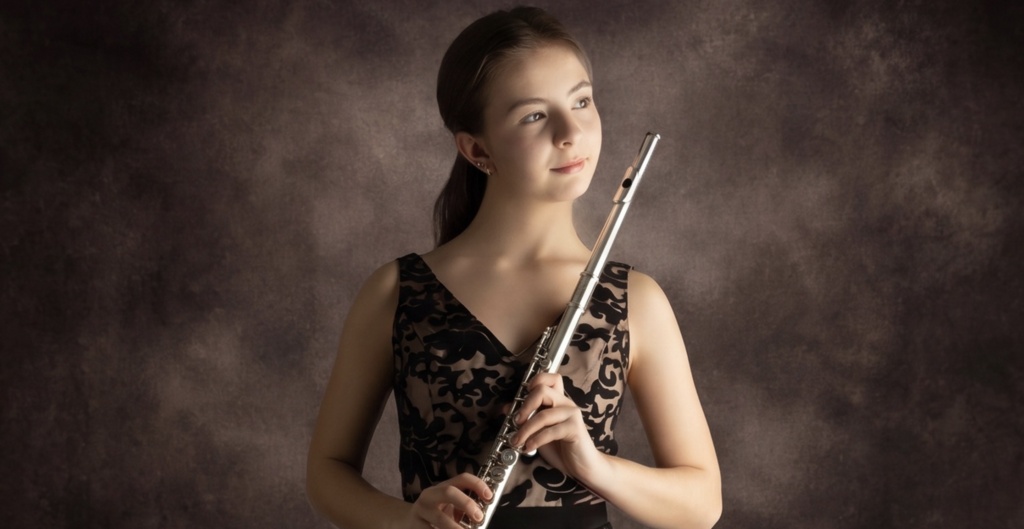
Teen Flutist to Watch Asya Sokol
“Music has always been something I have felt very deeply in my heart for as long as I can remember. After my passion for music was discovered when I was five, I began full-time flute studies at the Mimar Sinan Fine Arts University Istanbul State Conservatory at the age of nine, under the guidance of my teacher, Özlem Noyan. I wholeheartedly believe that I was born to make music, and I am passionately pursuing my dream of performing as a soloist on the world’s greatest stages alongside leading orchestras from around the world.”
1. How old are you and where are you from?
“I am 14 years old and I live in Istanbul, Türkiye! I was born on May 14, 2012.”
2. Where and with whom are you studying?
“I am studying full-time in the Flute Department of the Mimar Sinan Fine Arts University (MSGSÜ) Istanbul State Conservatory with my teacher, Özlem Noyan. At the same time, I am the youngest member of the Marmara Flute Orchestra, conducted by Prof. Dr. Ece Karşal.”
3. How and why did you choose the flute?
“From a very young age, I apparently began expressing the music inside me through the most natural instrument of all—my voice. Despite my young age, the vocal instructor and voice analyst Emre Yücelen was impressed by the color and range of my voice and reached out to me. Thanks to him, it became clear that I was not simply a little child who loved singing, but that there was a much stronger and deeper musical talent within me.
When I was nine, I took the entrance examinations for conservatories and was accepted into the departments I applied to. However, I chose the flute because of the instrument’s enchanting sound, the feeling of bringing music to life directly through my breath, and the special connection I felt with the instrument. Ultimately, I followed what my heart truly wanted.”
4. What is your dream as a flutist?
“My biggest dream is to become one of the world’s finest flutists when I grow up. I would love to perform as a soloist with world-renowned orchestras on the most important stages around the world, touch the hearts of thousands of people from different countries with the sound of my flute, and share the universal language of music with everyone.
I also have another dream that is especially meaningful to me: to represent my country on important stages around the world and to bring Turkish works and composers to the international music scene. I would love to contribute to helping audiences in different parts of the world discover the richness of Turkish music and become more familiar with the works of our composers.”
5. What does your schedule look like for the next six months?
“My schedule for the next six months is extremely busy, but equally exciting! In addition to my regular conservatory classes and daily practice sessions, our concert rehearsals with the Marmara Flute Orchestra are continuing. This year, I am also continuing my solo preparation for Donizetti’s Flute Concertino for Two Flutes. In addition, I will be increasing my piccolo studies both as part of my conservatory training and through my work with the Marmara Flute Orchestra. Alongside this, I am working on new repertoire for upcoming international masterclasses and competitions abroad. You could say that my flute will hardly ever leave my hands!”
6. What are your personal and professional goals?
“Personally, I want to feel my music more deeply every day, never stop working with discipline, and always keep that childlike excitement alive inside me.
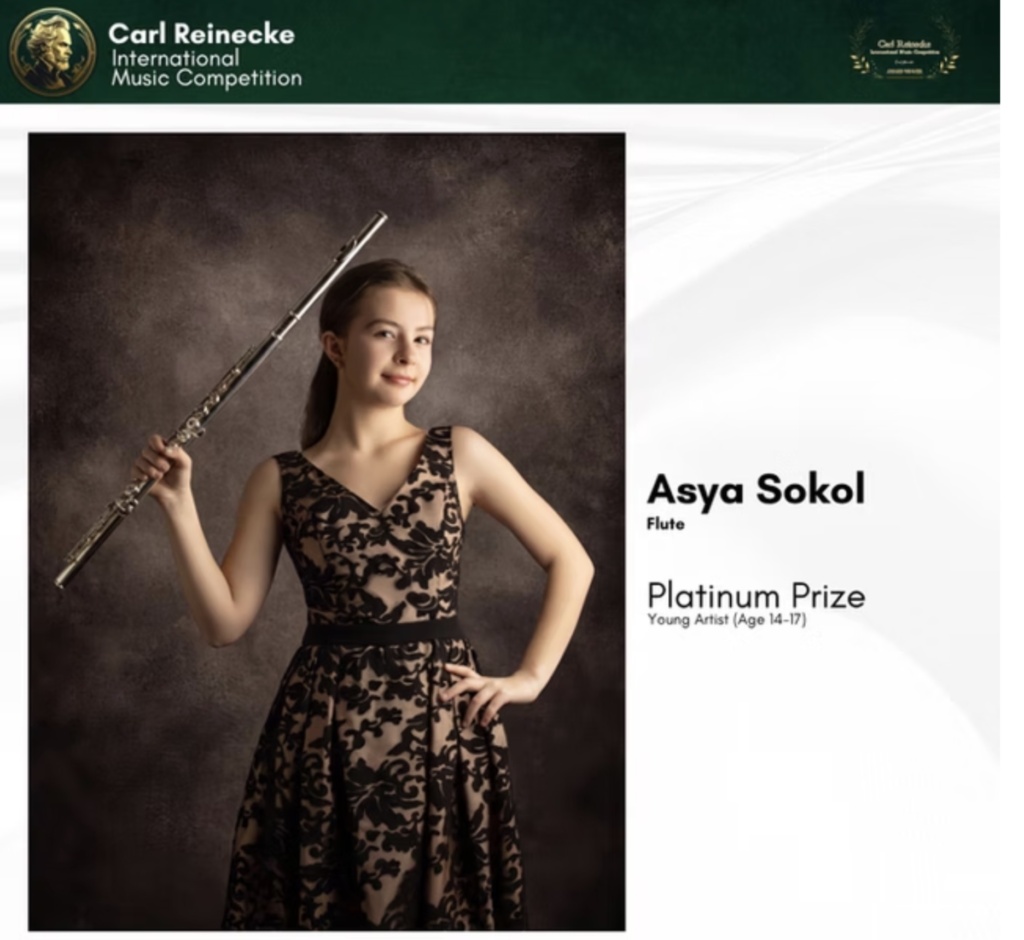
Professionally, I aim to continuously improve myself, inspired by the first-place awards, unanimous first-place distinctions, and special prizes such as the Expressive Performance Special Prize and Best Performer that I have received in the international competitions and festivals I have participated in so far. I see these experiences at international organizations not simply as results, but as starting points that encourage me to go even further.
I aim to continue developing myself through international masterclasses, competitions, concerts, and new repertoire, and to build upon the achievements I have made so far. Most importantly, I want to grow into an artist who can establish a sincere connection with the audience and, in the future, perform as a soloist with leading orchestras around the world.”
7. What inspires you the most in life?
“What inspires me the most is that very first note that comes out of my flute on stage and the bright smiles in the eyes of the audience! My teacher Özlem Noyan’s belief in me also gives me tremendous strength.
I am also deeply inspired by the passionate presence of great flute masters I have met and studied with at masterclasses, such as Andrea Oliva, Bülent Evcil, Sibel Pensel, Juergen Franz, Aslıhan And Say, Jasmine Choi, Viviana Guzman, Yağmur Soydemir, and Herman Van Kogelenberg. They always make me think: ‘That’s what I want to become, too!’”
8. What has been the biggest challenge you have faced professionally?
“I think my biggest professional challenge has been learning extremely demanding and monumental classical works in a very short amount of time at such a young age and preparing them for performance at international competitions. Balancing my conservatory education with the intense pace of international competitions, concerts, and masterclasses also requires tremendous discipline and effort.
At the same time, these challenges have shown me what I am capable of achieving when I work with determination.”
9. What has been the biggest personal challenge you have faced?
“Personally, the most challenging and unforgettable experience for me was preparing for and competing in the 5th International Cahit Koparal Flute Competition. Because of my busy schedule, I had only about one month to prepare six different and highly demanding works and perform them live in front of the jury and the audience.
Making it through the first round among 24 strong participants and completing the final stage pushed my limits more than ever before. However, this experience also gave me an incredible sense of confidence and strength.
At the same time, this process became one of the experiences that showed me what I can achieve when I truly believe in myself and keep working.”
10. Who have been your mentors in music, and what have you learned from them?
“I feel incredibly fortunate to have had such important teachers and mentors who have made valuable contributions to my musical journey throughout my life.
Özlem Noyan: My teacher at the conservatory. She is a guide who understands me very well, recognizes my musical character, and introduces me to works through which I can express myself in the best possible way, based on my experiences. She has given me an extraordinary work ethic; she has taught me how to produce a rich and beautiful tone on the flute and how to think like a true artist. Her guidance and support are invaluable to me, both in my musical journey and in my personal development.
Emre Yücelen: He was one of the first people to recognize my love and talent for music when I was very young. He taught me that music is not simply about notes, but is an emotion that comes directly from the heart.
Volkan Akkoç: I studied solfège with him during my preparation for the conservatory entrance examinations. He made a very valuable contribution to strengthening my musical foundations and supported me during an important stage of my musical education.
Prof. Dr. Ece Karşal: Through the Marmara Flute Orchestra, she taught me the beauty of playing in harmony with an ensemble and sharing music with others.
My masterclass professors: Andrea Oliva, Bülent Evcil, Sibel Pensel, Juergen Franz, Jasmine Choi, Viviana Guzman, Herman Van Kogelenberg, Aliya Vodovozova, Georgii Cherkin, Aslıhan And Say, Nicole Esposito, Vincent Lucas, Peter Verhoyen, Irina Stachinskaya, Nihan Atalay, and Marc Grauwels have each made a unique contribution to my musical development. From them, I learned to stand confidently on international stages as myself and to bring my own spirit and musical identity to every piece I perform.
All the wonderful teachers who have contributed to my education at the MSGSÜ Istanbul State Conservatory: I am deeply grateful to all of the valuable teachers at my school who have contributed to my education and artistic development.”
11. Can you tell us about five interesting, secret, or fun hobbies or passions of yours?
1. Writing lyrics in made-up languages for melodies I play by ear: Since I was little, I have loved playing melodies I hear on the piano by ear and accompanying them with lyrics in completely made-up languages!
2. Hunting for beautiful moments with my camera: Since both my mother and father are photographers, I love capturing the beautiful light, colors, and little details around me.
3. Freely improvising on my flute: Putting the sheet music aside and playing whatever I feel in that moment is one of my favorite ways to relax. After working on improvisation with Zoia Viazovskaya and Michael Michalakakos, I became even more passionate about it.
4. Ebru and painting: As the child of an artistic family, I have always been surrounded by visual arts. Creating art through the traditional Turkish art of ebru and through painting is a true passion of mine.
5. Singing: Singing is an indispensable passion of mine; I absolutely love it! Most recently, I recorded the vocals for “Sevenler Ağlarmış,” a song written and composed in 1974 by Feridun Hürel of the iconic 1970s Turkish rock band 3Hürel. The song is featured on Feridun Hürel Albümü II, an album containing 20 tracks performed by renowned artists from different parts of Türkiye, and it is available on digital music platforms.
12. What three pieces of advice would you give to young flutists under the age of 15?
“As someone who is also 14 years old, I would like to share these three things with my peers and younger flutists:
Feel the story behind the music: Playing the correct notes is not enough. We should never forget that every piece we play has an emotion and a story behind it. We should imagine and feel that story while we perform.
Learn to love practicing: Practicing regularly is very important. But instead of seeing it as a compulsory task, we should see it as the most enjoyable time we spend talking to and building a connection with our instrument.
Believe in yourself and don’t be afraid of criticism: Let’s accept our teachers’ advice as gifts. Let’s never give up, keep learning, and never be afraid to express our own music freely and with love.”