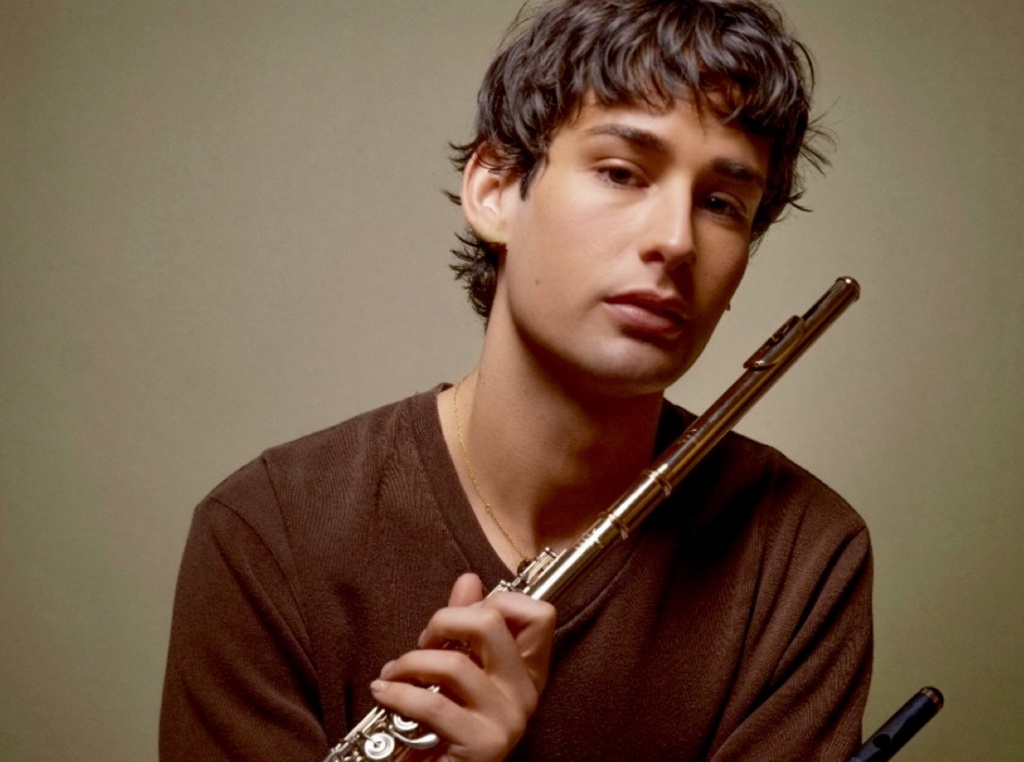
Meet Jarrett May, Phoenix Symphony’s New Piccolo Player
By Elizabeth Pickens
Jarrett May joined The Phoenix Symphony as Piccolo/Utility Flute at the start of the 2025–26 season. Originally from Fort Worth, Texas, he studied flute with Terri Sundberg, Professor of Flute at the University of North Texas, before attending Interlochen Arts Academy, where he studied with Nancy Stagnitta. He earned his Bachelor of Music degree from the Eastman School of Music, where he studied with Bonita Boyd and Anne Harrow, and his Master of Music degree from the Yale School of Music, where he studied with Tara Helen O’Connor and Ransom Wilson.
How old were you when you started playing the flute?
I started playing the flute when I was in fifth grade.
What made you choose the flute?
I don't necessarily remember what made me choose the flute, but I do remember that it was cheaper and lighter than most instruments. It was easier for me to carry home since I walked home from school, and it also made it easier for my family to afford for me to be in the music program.
How old were you when you started playing piccolo? How did you get into piccolo playing?
I believe I played piccolo once or twice in marching band, but I was never really drawn to the piccolo. I thought it was cool because you got to be one of the only people in the flute section to do it, but my passion was always for flute when I was younger. Piccolo was just something I did for fun every once in a while.
When I went to the Eastman School of Music, we were required to take piccolo lessons with Anne Harrow, who runs the chamber music department and is also the piccolo professor. My flute teacher, Bonita Boyd, required us to take those lessons, with juries every year and everything. Anne basically taught me how to approach the instrument from the ground up.
What is your current age?
I am 27 years old.
Who were your teachers from first to most recent? Describe their teaching style or what they impressed on you.
My teacher in Texas growing up was Terri Sundberg, a professor at the University of North Texas. She really instilled in me the importance of discipline and working hard on the basics and fundamentals. She helped get my playing to a level where I could consider flute as a possible career choice and pursue it in college.
At the Eastman School of Music, my teachers Bonita Boyd and Anne Harrow really taught me the ins and outs of how to physically play the instruments. I think that is something that is lacking a lot in flute pedagogy: simply understanding physically how things are working, especially internally inside the mouth and with the airstream. I think it is very rare to find a teacher who goes into extreme depth on those things.
My teachers at Yale, Ransom Wilson and Tara Helen O'Connor, were extremely influential in a different way. They took the abilities I had gained from Eastman and capitalized on making me employable in the orchestral workforce. They knew that getting into an orchestra was a goal of mine, so they pushed me to continue doing piccolo in lessons as well as flute. At the time, I never really could make up my mind about whether I wanted to do flute or piccolo, so I kept both options open to me.
At a recent masterclass, I was impressed by how much knowledge you had about piccolo. It seemed like a lot of it came from experience and discovery. How did you get so good at figuring things out?
I think a lot of it comes from having very descriptive and in-depth teachers and then learning how to observe and understand my own playing. My teachers gave me a lot of information about the physical side of playing, and over time I learned how to connect that information to what I was actually experiencing.
I also think that recording myself has been a huge part of that process. I think a lot of times we can improve and avoid a lot of bad habits if we just record ourselves. For me personally, and I can probably speak on behalf of most people, recording yourself is not the most fun thing, but when you do it consistently for a prolonged period of time, it becomes second nature and doesn't feel as personal or like such a hit to the ego.
Recording yourself will not only improve your ear and your physical capabilities, but at some point you really do start to notice how you actually sound and what your habits actually are. It is kind of like having a constant mirror.
You have obviously had successful auditions. What do you do to prepare music for auditions? What do you do to prepare mentally?
It is really difficult to continue preparing for auditions when you have a full orchestra work schedule, simply because the amount of time the instrument is on your face from day to day is so intense, especially during the winter season when it is Nutcracker season and there are a lot of performances happening at once.
What has changed the most for me is putting a lot of emphasis on practice away from the instruments and really organizing things in my head, especially through listening and visualization. I find that if I can visualize my excerpts and myself playing them correctly and cleanly, while also thinking about what fundamentals are required for that excerpt, I can eliminate a lot of unnecessary work that I would have had to do if I had just physically tried to play it right away.
Nowadays, instead of always playing through an excerpt specifically, I will identify a certain fundamental skill that the excerpt requires and do exercises based on that skill. That helps me at work because I am working on fundamentals, but it also transfers to the excerpts later when I need to physically practice them.
Describe a professional audition day to us.
For me, the biggest part of an audition day is trying to make the day feel as normal as possible. I want to arrive prepared enough that I am not trying to learn anything new that day. I rely on the work I have already done, listen, visualize what I want to do, and focus on the fundamentals rather than trying to force a performance. The goal is to stay present and let the preparation take over.
You have been with Phoenix Symphony for about one year now. What have been highlights? What pieces did you enjoy most? Did anything surprise you?
Last season, we performed Tchaikovsky's Fourth Symphony, which was my first time ever playing it and preparing it for a performance rather than for an audition. It was definitely trial by fire, and it is something I will never forget—playing my first Tchaikovsky Fourth Symphony.
What piccolo do you play on? What do you love about it?
I play on a Burkart Elite piccolo with gold tenons and silver keys. I have always played on Burkart since I started playing piccolo regularly at Eastman. I used the school's Burkart piccolo there. For me, Burkart is the piccolo I choose simply because of the ease of response. Piccolo can be very difficult, and for me, this instrument gets rid of a lot of those hurdles. I think that opens up the possibilities of being more artistic on the instrument, simply because things feel easier for me on this brand.
What advice do you have about transitioning from flute to piccolo?
The overall mistakes I see most often are people using too much air and not enough air speed—too much quantity and not enough speed. The direction of the air on piccolo also has to be much more downward. Because the hole is a lot closer to the face on piccolo than it is on flute, where it is a little farther out, the air direction needs to change. Those would be the main things I would tell people to focus on immediately.
You said in an early interview that you felt your greatest contribution would be as a pedagogue. Do you continue to feel this way and why?
I do. I think the reason I feel that way is because I have been extremely lucky to have very descriptive and in-depth teachers, and I think that is very rare in the flute community. I feel like it is my responsibility to continue passing on the information they were so generous to give me.
It is not easy to teach lessons over and over and over to young people and be as in-depth all the time, and I really commend my teachers for giving me all the knowledge that they had. I feel like it would be a great honor to continue their teachings with the people I teach because I am so grateful to have had the opportunity to receive such good information.
What does your practice focus look like now?
My practice focus nowadays is definitely playing both instruments. Flute and piccolo are used in my workday basically every day, so I like to do about an hour—30 minutes on each instrument—just working on basics, with a lot of drone work and intonation exercises.
Mostly, that hour is used to develop the kinesthetic feeling of switching between the instruments, while also recognizing the difference in the way playing each instrument feels. Eventually, I want it to become second nature to pick one up or the other without having to think too hard. I am still in a stage of feeding my brain these good habits on both instruments when switching between the two.
What feels the most challenging in your playing?
I would not say anything ever feels completely natural. I think the physicality of playing an instrument changes from day to day. We try to make it as consistent as possible, but there are always going to be some things that feel uncomfortable.
Especially playing in an orchestra, the most stubborn thing is always managing your ear and your intonation. It is not always about playing perfectly in tune; it is about being able to adjust on the fly. I think that is something every new orchestral player has to go through. We work so hard for so long to play everything in tune and perfectly with a drone, but we forget that in the everyday workforce, everything is not always going to be perfectly in tune. You have to be able to meet yourself and your colleagues where everyone is that day.
Since I am playing piccolo at work so often, everyone can hear me playing, so I have to adjust as quickly as possible. I think that is probably the thing that feels the most stubborn when it comes to getting through services day to day.
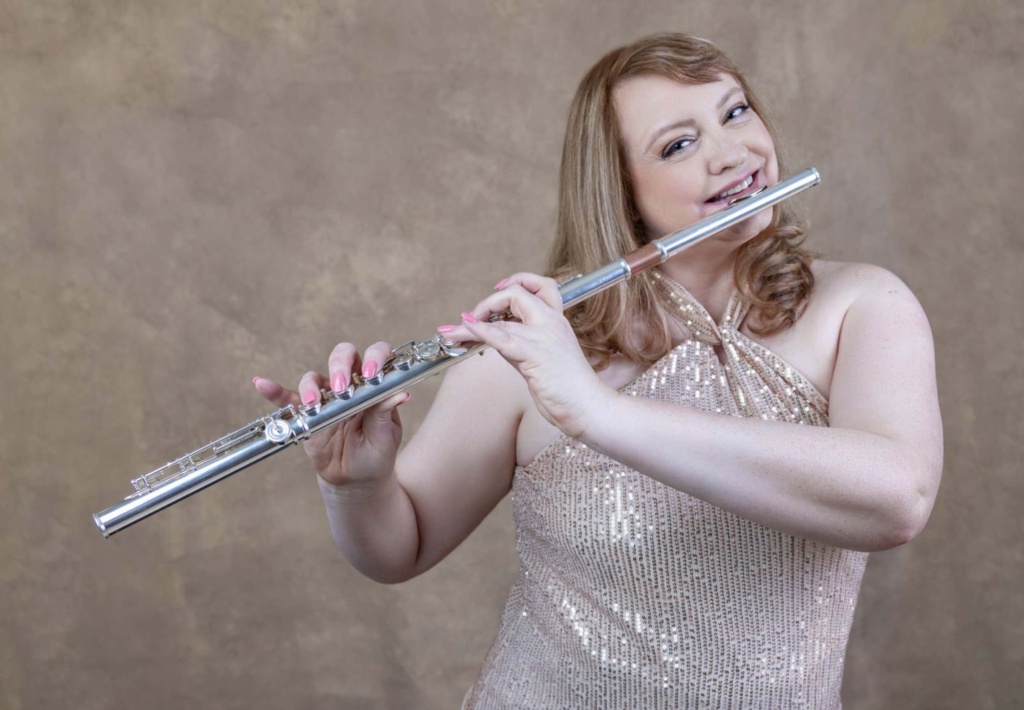
Author Elizabeth Pickens is a writer, flutist, and flute instructor from Scottsdale, AZ. She studied with Carol Noe at James Madison University and is a student of Tracy Harris. Currently, she is working on a middle grade novel called The Magic Flute. Her teaching website is https://fluteteacher.net.