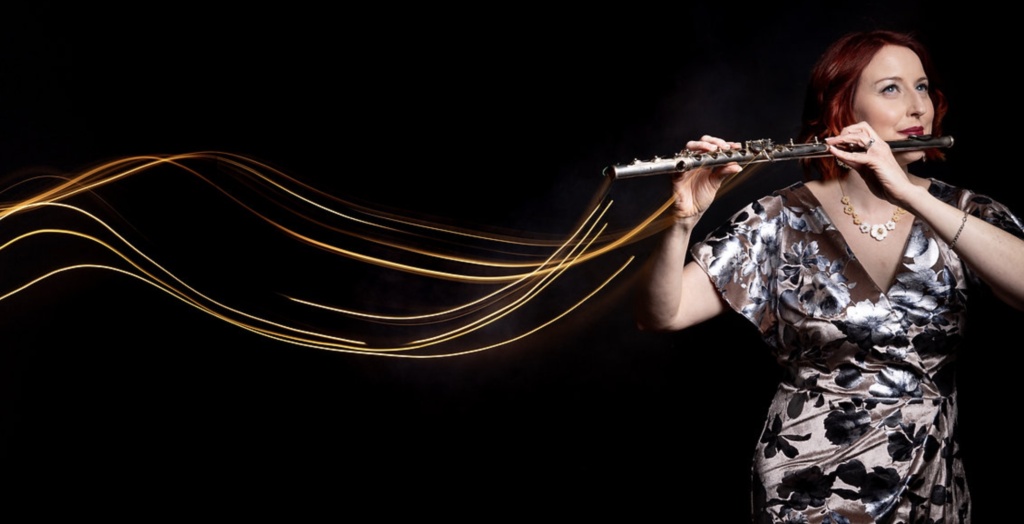
NEW Album Release: Lindsey Goodman, the Journey of “Temporal Echoes”
Temporal Echoes is a striking title. What does the idea of “temporal echoes” mean to you personally and musically, and how did it become the conceptual thread of the album?
Temporal Echoes is the title track of our album, composed by What Is Noise founder and violinist Joshua Burel. Inspired by “Time” by Pink Floyd, Josh began writing the piece as the band’s landmark album The Dark Side of the Moon celebrated its 50th anniversary alongside WIN’s own 10th anniversary, which was the milestone that inspired the recording of our album. Through Temporal Echoes, Josh invites listeners to reflect on introspection, the fleeting nature of existence, and the cyclical rhythm of life, exploring the relationship between personal growth and the relentless passage of time.
The album explores memory, place, and the way shared experiences reverberate through time. How did these themes shape your approach to programming and interpretation?
As What Is Noise pianist Cholong Park often says, “we’re making memories.” When we began planning our sophomore album to commemorate the ensemble’s 10th anniversary, the passage of time naturally became a central theme. Since WIN was originally formed to perform a work by Joshua Burel, including a new composition by him felt inevitable.
The album reflects both our history and our evolution as an ensemble. It features works that have been part of WIN’s journey from early on, such as Ellen Taaffe Zwilich’s Divertimento, alongside newly commissioned pieces, like Wander by Jensen Thomassie. Together, these works act as musical bookends, capturing the ongoing story and growth of the group over the past decade.
Contemporary music often invites listeners into unfamiliar sonic landscapes. How does Temporal Echoes create a narrative or emotional journey for audiences, even within highly modern musical language?
Temporal Echoes offers something for everyone, reflecting the wide range of voices and styles found within contemporary classical music. Jennifer Jolley’s How to Be a Deep Thinker in Los Angeles is a text-driven work that pairs percussion with a poem by Kendall A., while Kevork Andonian’s A Footstep Too Far from My Soul… draws on Armenian rhythms, folk melodies, traditional textures, modal language, and patriotic songs.
Whether you’re drawn to lyrical melodies, compelling rhythmic grooves, or adventurous sound worlds, there’s a piece on Temporal Echoes that will resonate with your musical tastes!
Was there a particular work on the album that became an emotional or philosophical anchor for the project?
Daniel Whitworth’s Ripples in Infinity is the longest and most expansive full-ensemble work on Temporal Echoes. Daniel describes the piece as “vibrant and colorful” on the surface, while beneath it lie “glimpses of something dark and stormy with an almost unyielding intensity.” It’s a captivating work that takes both the listener and the ensemble on a journey.
What Is Noise had just begun performing the piece when I joined the ensemble in 2019. Coming from a strong background in conducted chamber music, WIN’s unconducted approach, relying on an ensemble built from collaboration and communication, felt incredibly liberating.
Ripples in Infinity is rhythmically intricate, technically demanding, and full of difficult tempo transitions, so diving into it in my first rehearsal with the ensemble was daunting. At the same time, the piece taught me early on to trust my collaborators. Every performer has to know one another’s parts intimately and rely on each other for a successful performance. For me, this work represents What Is Noise at its best.
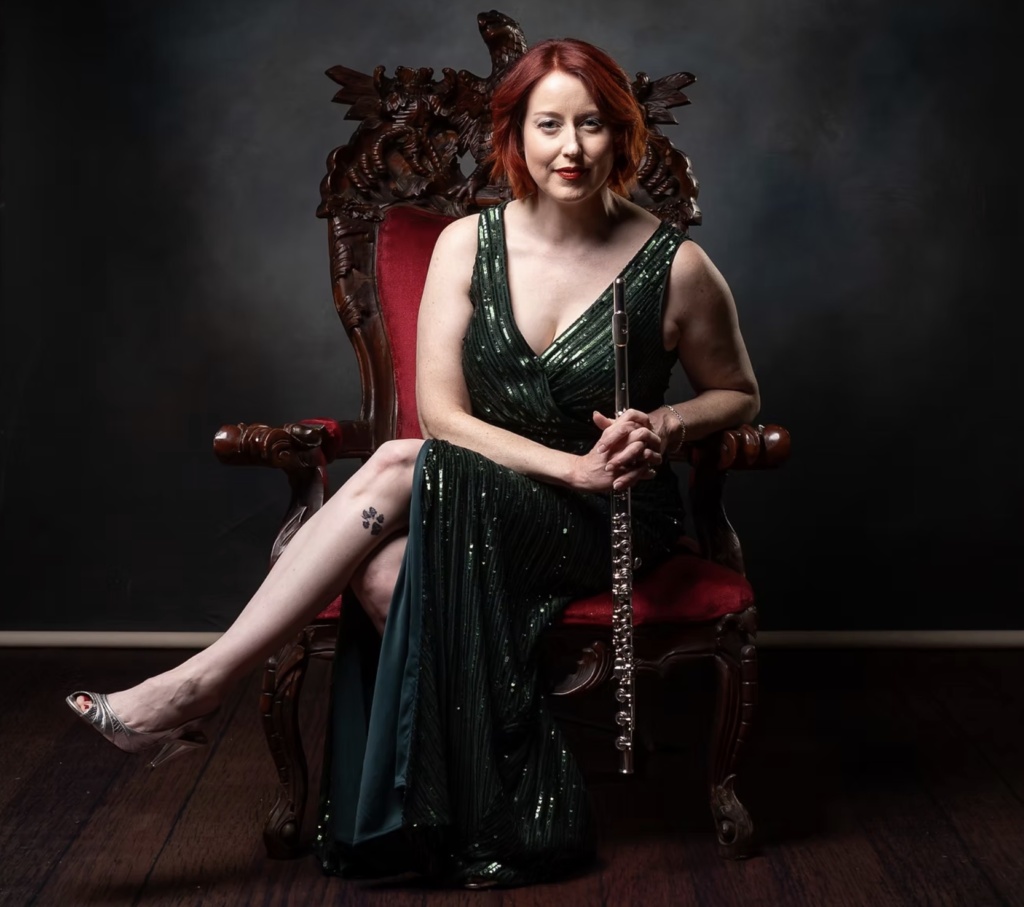
The relationship between sound and memory is central to this release. Do you feel certain timbres, gestures, or textures on the flute have a unique ability to evoke remembrance or nostalgia?
To me, the flute evokes nostalgia most powerfully through color and through the fragile edges of dynamic possibility. Ellen Taaffe Zwilich’s Divertimento opens with a unison pitch shared by the quartet, and that same gesture returns throughout the work, functioning as a structural anchor. Each time Zwilich brings it back, she is asking the listener to pause and remember that sonority.
Finding a flute tone that blends seamlessly with clarinet, violin, and cello at forte or fortissimo is a fascinating challenge, and flutists can be remarkably particular about what constitutes the “perfect” sound. In chamber music, and especially in new music, there is ultimately no room for ego when it comes to tone. Either the sound serves the music or it doesn’t. Our responsibility is always to shape the flute’s voice in service of the larger musical vision, not the other way around.
As founder and artistic force behind What Is Noise, how has the ensemble’s artistic identity evolved over its ten years, and how does this album reflect that evolution?
I joined What Is Noise in 2019 and remain the ensemble’s newest, yet oldest, member, though my work in new music, particularly in the Pierrot sextet, spans more than 25 years. I consider this chamber orchestration my musical home, functioning almost like a miniature orchestra, which is also one of my artistic north stars.
Since joining WIN, I’ve witnessed a clear ambition within the ensemble to dream bigger. From releasing our sophomore album to performing at Lincoln Center, we’ve been fortunate to realize many of those aspirations. Because Temporal Echoes features winning works from our 2019 call for scores, the album feels both like a culmination of what the ensemble has accomplished during my tenure and a celebration of the group’s milestone anniversary.
What Is Noise has long championed music of our time. How do you approach balancing intellectual rigor, experimentation, and emotional immediacy in contemporary repertoire?
When performing new music, there are typically no reference recordings to consult, so interpretation emerges directly from the source materials: the score and the composer. In contrast, canonic repertoire often has dozens of recordings and established performance traditions that can span centuries, which sometimes lead performers to overlook the primacy of the score.
With new music, study and experimentation are what drive interpretation, both at the level of the individual musician and the ensemble as a whole. The goal is to bring the emotional content of the work into focus for the listener in real time. Discovering what resonates with an audience while the ink is still fresh on the page is the most compelling aspect of working in new music!
Were there collaborations with composers on this project that especially shaped the final recording?
One particularly meaningful collaboration was with young composer Jensen Thomassie, who was a student at Furman University when What Is Noise received a multi-year Furman Standard Grant. Through that partnership with the university community, we worked closely with student interns in areas such as social media, marketing, and event planning, while also performing, presenting, and recording on campus.
As part of the collaboration, we commissioned Jensen to compose Wander for the ensemble. The piece resonated so strongly with both the group and our audiences that it ultimately became the opening track of the album. WIN remains deeply grateful for our three-year partnership with the Furman community and for the creativity and energy that collaboration inspired.
What technical or expressive challenges did this repertoire present for you as a flutist, and did it push you into any new sonic territory?
One of the challenges of performing with What Is Noise is that we are based all over the country. We don’t have the luxury of regular rehearsals; instead, we come together for intensive, project-based periods: preparing a concert, a recording, or educational outreach. As a result, we arrive at our first rehearsal, sometimes only 24 hours before a performance, fully prepared, having thoroughly learned both our individual parts and the score. There is simply no time to fumble over notes or rhythms.
Flutists, in particular, tend to be perfectionists, so one of my biggest challenges in making this album was arriving at the recording session not only note-perfect, but also ready to remain curious and open to collaborate, experiment, and follow wherever the music led us.
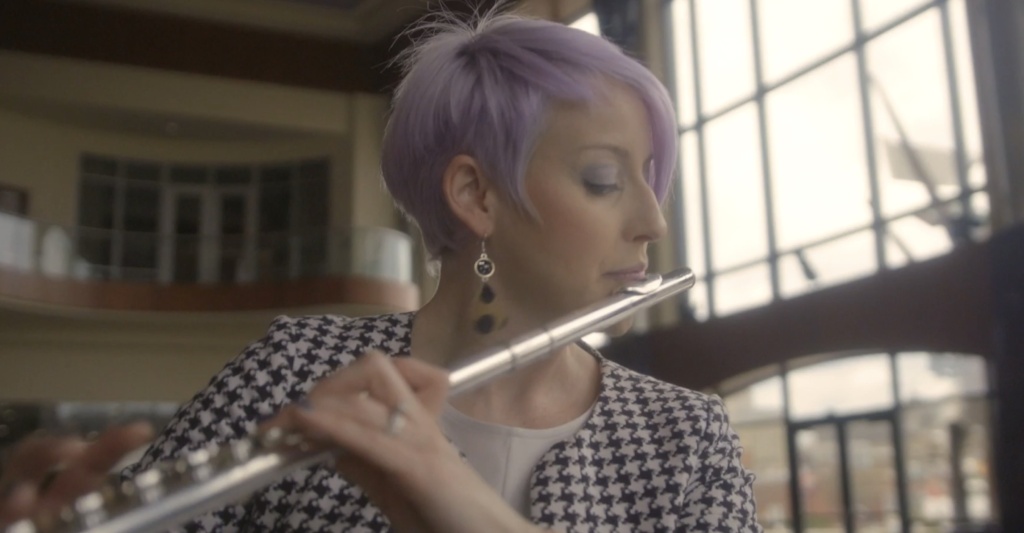
Your ensemble has emphasized mentorship through initiatives like the Young Artist Spotlight and Composer Spotlight. How does that educational mission intersect with your recording projects?
What Is Noise was originally founded at Florida State University by a group of student collaborators, and although the ensemble’s personnel has evolved over time, no member of WIN has forgotten the opportunities that shaped us as young musicians. That experience continues to inspire our commitment to education and mentorship.
Whenever possible, the ensemble seeks to create meaningful opportunities for emerging artists and students, whether through school partnerships like our multi-year collaboration with The Parish School or through initiatives such as our Young Artist Competition, which brought six rising musicians to Lincoln Center to perform side-by-side with the ensemble during our 10th anniversary concert.
We also launched a Spotlight Composer Competition for creators of all ages, and we were thrilled when young composer Willie Cornish Jr. won the competition and had his work featured on our Lincoln Center program as well!
The title suggests resonance across years and spaces. Were there personal memories, places, or relationships that quietly informed your interpretations?
I’m married to a percussionist who is also a composer, so Jensen Thomassie’s Wander, written by a young percussionist-composer, holds particular significance for me. As an educator, mentoring the next generation of musicians is central to my work, but I also recognize in Jensen’s path many parallels to my husband’s own professional trajectory. Supporting emerging voices in this way feels like a meaningful extension of that broader commitment to the field, as well as a reminder of how interconnected these musical lineages can be.
Having made your debut at Carnegie Hall and recently celebrating a milestone performance at Lincoln Center, how has performing in such spaces influenced your thinking about sound, space, and time?
My most sacred spaces are performance venues; any place where musicians and audiences gather together to experience sound in real time feels holy to me. In 2025, I had the incredible honor of both making my solo debut at Carnegie Hall and performing with What Is Noise at Lincoln Center.
I try to approach every concert as if it is the most important one, because you never know what emotional significance a piece of music or a performance experience might hold for someone in the audience. That said, performing in these two historic venues was especially meaningful. Both spaces feel alive with the accumulated presence of countless musicians, works, and concerts from the past. Becoming part of that ongoing legacy was an experience I will gratefully carry with me for the rest of my life.
Contemporary flute repertoire often expands traditional notions of tone color and technique. Were there extended techniques or sonic effects on this album that felt especially meaningful rather than merely experimental?
Most of the music on Temporal Echoes centers on straightforward flute playing, though extended techniques and experimental forms of musicianship have always spoken to me deeply. One work that feels especially personal on this album is Rob Smith’s Sprint, which captures the physicality of running in musical form. As a distance runner, I’m naturally oriented toward endurance rather than speed, but the cardiovascular conditioning from running directly benefits my playing.
In Sprint, the ensemble is asked to breathe heavily and audibly, like runners recovering after exertion. Producing that sound onstage immediately elevates my heart rate; my instructively body recognizes it from running! The challenge of executing precise virtuosic passages immediately afterward becomes more intensely physical than it would be otherwise.
In what ways does Temporal Echoes speak to the present moment? Do you see it as a reflection on memory, or also as a response to the times we are living in?
New music, by definition, reflects the world we inhabit right now. What Is Noise is committed to working with living composers because, unlike the canonical creators of past centuries, these artists are responding to the same moment, place, and events that we and our audiences are experiencing. Rather than Bach, Beethoven, or Brahms, we actually know composers such as Jenn, Rob, and Josh, and we are better musicians for those relationships, as well as better listeners for the perspectives they bring to our shared present.
The ensemble’s name, What Is Noise, poses an enduring artistic question. After ten years and this new release, how would you answer that question today?
The ensemble’s name draws inspiration from Jacques Attali’s Noise: The Political Economy of Music, which argues that music has lost some of its inherent social value as it has become commodified. What Is Noise seeks to reclaim that value by creating meaningful connections between composers, performers, and communities through live performance, collaboration, and educational outreach. With two albums, multiple commissions, a performances all over the country since our founding in 2013, WIN still actively seeks the innate value of music, specifically that by living creators, to our society.
What do you hope listeners carry with them after hearing Temporal Echoes—an image, a feeling, perhaps even an altered perception of time itself?
We hope listeners come away from Temporal Echoes having discovered a new favorite piece of chamber music or a new favorite living composer, and feeling excited to engage more deeply with those artists, with our ensemble, and with the music of our time. Ultimately, we hope that the album sparks curiosity, connection, and a lasting appetite for the music being created right now.
Looking ahead, has this project opened new artistic directions for you or for What Is Noise?
What Is Noise is looking ahead with real excitement for what comes next! We’re eager to share Temporal Echoes with audiences, to see how the music resonates over time, and to carry that momentum into a new performance season. Personally, I’m enthused that this album marks WIN’s first release with my PARMA Recordings family, and we’re also continuing to explore new collaborations and projects that expand what the ensemble can do.
To stay connected with our work and follow our next adventures, please find us on Facebook and Instagram or subscribe to our newsletter at www.whatisnoise.net/contact. We’re excited to see where the music leads us next!