Going for Gold: Can Competitions Be Nurturing?
By Karen North
Music competitions are often associated with pressure: the polished performance, the ranking, the result, the nervous wait to see who has won. Yet competitions can also be designed to nurture rather than intimidate. At their best, they give players a meaningful goal, introduce them to inspiring repertoire, offer feedback from respected artists, and connect them with a wider musical community. In an online competition, where players can record from home, a teacher’s studio, a school hall, or almost anywhere in the world, the emphasis can shift from “Who won?” to “What did this experience make possible?” The gold, in this sense, is not only the prize; it is the growth, confidence, connection, and musical discovery that happen along the way.
Some teachers are cautious about competitions, and rightly so. While competitions can encourage focus, commitment, and high standards, they can also lead students to compare themselves too harshly with others. Some players thrive on the challenge, while others find the very word “competition” intimidating. The question, then, is not simply whether competitions are good or bad for students, but what kind of experience they offer to the people who enter.
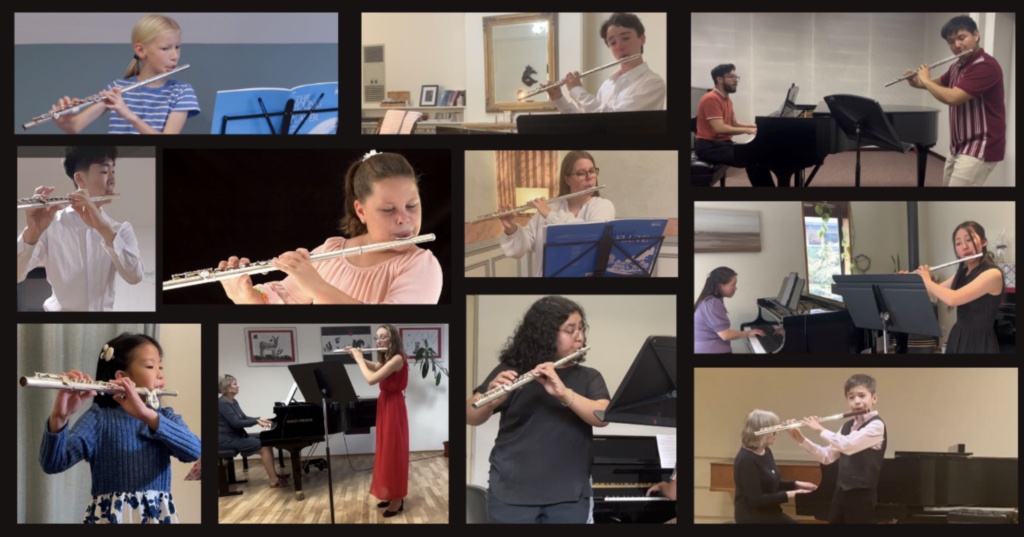
When I began the Lyrical Flute International Championship in 2021, my aim was to create a performance opportunity that felt positive, accessible, and musically meaningful. This online competition is for flute players of all ages and levels, with students and adult amateurs submitting video performances from selected repertoire. While prizes are awarded, I have always wanted the event to be about more than results. For many entrants, the real value lies in choosing a piece, preparing it carefully, recording it, receiving feedback from world-class judges, and feeling part of a wider flute community.
Rethinking What “Gold” Means
In any competition, there will always be winners. This is part of the structure, and for many participants it is exciting and motivating. A prize recognises excellence and artistry, and there is nothing wrong with celebrating achievement. However, if winning becomes the only measure of success, a competition can easily become too narrow.
For a developing musician, “gold” may be something quite different. It may be the first time a player performs with real confidence. It may be the moment an adult beginner decides they are ready to perform publicly, even through a video submission. It may be discovering a piece that inspires daily practice or receiving a judge’s comment that helps unlock the next stage of musical growth.
One adult entrant wrote to me after taking part: “This was my very first ‘public’ appearance. This has given me confidence, and I will now be performing in a recital in December. I took up the flute at age 66 after retiring and it has brought great joy to my life.” For that player, the competition was not only about a result. It became a stepping stone towards a performing life that had not seemed possible before.
A Goal Beyond Exams
For many young musicians, exams provide a useful framework. They give students a syllabus, a deadline, and a sense of progression. However, after the exam is over, teachers are often looking for a fresh goal that feels musically rewarding rather than assessment-driven.
A competition can fill this space beautifully if the repertoire is chosen carefully and the atmosphere is encouraging. It gives students a reason to continue polishing, listening, phrasing, and performing after the pressure of exams has passed. Flute teacher Sherene Nee described this very clearly when she wrote, “The championship is my students’ favourite thing to do after all their exams. They look forward to playing these pieces as a celebration each year.”
I love the word “celebration” in this context. It reframes the competition completely. Instead of being another test, it becomes a musical event to look forward to, a reason to explore new pieces, and a way of marking the end of a year’s work with something creative and positive.
A well-designed competition can encourage high standards without making participants feel that their worth as musicians depends on a placing. It gives them a date to work towards, but also a purpose beyond the date itself. They prepare, improve, record, reflect, and in many cases grow more than they expected.
Lowering the Pressure Through Video Performance
Live performance has enormous value, but it is not always the most accessible or least intimidating way for students and adult flute players to share their playing. The physical stage, the audience, the travel, the unfamiliar room, and the single chance to perform can create a level of pressure that may overwhelm some players, especially beginners, anxious students, or adult amateurs returning to music after many years.
Video entry changes the experience. An entrant can record at home, in a teaching studio, at school, or in another familiar space. They can try more than once, listen back, learn from what they hear, and record again. This process is itself a valuable form of practice. Players often become more aware of tone, rhythm, phrasing, posture, and expression when they watch and listen to themselves.
For some players, this makes the competition feel possible. One teacher wrote that preparing and recording an entry was “such a wonderful experience” for a beginning student, giving her “a lovely, non-confrontational sense of achievement.” That phrase captures one of the real strengths of virtual competitions. They offer the sense of occasion and accomplishment without the full intensity of a live stage experience.
The online format also removes many practical barriers. Families do not need to pay for flights, accommodation, or long-distance travel. Students and adult amateurs in regional or remote areas can participate. Teachers can include the competition as part of their studio year even if there are no major flute events nearby. Entrants from countries without easy access to international competitions can still be heard by judges from other parts of the world.
If we want competitions to nurture, we need to think not only about who is talented enough to enter, but who is practically able to enter.
Feedback as Another Kind of Prize
One of the most valuable parts of any competition is feedback. A prize may be exciting, but a thoughtful comment from an experienced artist can stay with an entrant for a long time. It can affirm what is already strong, identify an area for further growth, or help a player understand their performance in a new way.
In the Lyrical Flute International Championship, every entrant receives a certificate and a brief comment from the judges. As there is no entry fee and a large number of participants, these comments are intentionally concise, but they are still meaningful. A player might be praised for beautiful tone or expressive phrasing. Another might be encouraged to shape longer lines, explore more dynamic contrasts, or keep developing rhythmic clarity.
Over the past five years, the judging panel has included distinguished international artists such as Sir James Galway, Lady Jeanne Galway, Viviana Guzmán, Lorna McGhee, Sonia Croucher, Ulla Miilmann, Maria Fernanda Castillo, Joshua Batty, and others. The calibre of the panel matters, not only because it gives the competition credibility, but because entrants know their performances have been heard with care by musicians whose experience is broad and deep.
A parent or teacher may say something many times, but when an international artist writes a similar comment, the student often hears it differently. One family wrote after the results were released, “Many thanks to the amazing judges for their high assessment of Sofia’s performance - this is very valuable to us!” Encouraging feedback from outside the lesson room validates a student’s work and provides fresh motivation.
Repertoire as Discovery
Competitions are often remembered for the performance itself, but the choice of repertoire can be just as important. A well-chosen piece can open a player’s ears, imagination, and technique in unexpected ways.
One of my aims in creating the Lyrical Flute International Championship was to give students and amateur players a reason to explore repertoire beyond the pieces they already knew. The competition repertoire includes classics, but it also includes many works by living composers, including over 100 pieces I have commissioned through Allegro Music Publishing.
This has become one of the most rewarding aspects of the competition. Participants who may never have considered playing contemporary repertoire discover that new music can be lyrical, playful, dramatic, atmospheric, or full of character. Teachers find pieces that develop their students’ tone, phrasing, articulation, and imagination. Living composers hear their music performed by players from all over the world.
Occasionally the exchange runs both ways. In the 2022 Championship, thirteen-year-old Jack De Ravin played Shima Enaga by the composer and flutist Gary Schocker. Schocker saw the video and was so delighted that he wrote a new work especially for Jack. Some of the best outcomes are the ones nobody could enter for.
Several teachers have commented on this aspect of the competition. Canadian flute teacher Jen Cluff wrote on her blog that it was “a brilliant idea to spread the word about these beautiful new lyrical pieces” and to offer “interpretive diversity” in performances of newly published works. Another teacher described the competition as an opportunity for students to “learn the amazing new repertoire” while also being inspired by the high level of adjudicators. An adult entrant put it more simply. She wrote, “[the pieces are] how I reward myself after each practice session.”
When students and adult amateurs play music by living composers, they learn that the repertoire is not fixed in the past. It is still growing, and they are part of that growth, even as developing players.
Access and Inclusion
If competitions are to be nurturing, access must be more than a practical detail. It needs to be part of the philosophy.
Keeping entry free has always been central to the Championship. Many competitions, particularly international competitions, have substantial entry fees, and this can become a barrier for students, families and adult amateurs. Entrants do need to purchase selected repertoire, but costs are kept as low as possible, with many pieces available individually as well as in collections. In some cases, music is provided free to students in countries where access is especially difficult. One parent described what that difference is worth, “[I had] from time to time, found myself adding up the various competition entry fees … and wondering why it all needs to cost so much. And then we found you. No entry fees.”
Accessibility also includes being willing to adapt where possible. Over the years, I have been able to assist hard-of-hearing and blind flute players to enter, including providing music in a suitable format so it can be transcribed using a Braille machine. The mother of one hard-of-hearing student wrote, “Thank you so much for this opportunity. It’s rare hard of hearing/deaf children get to participate in competitions like this.”
That message stayed with me. It is a reminder that inclusion is not an abstract idea. It is a student being able to take part when they might otherwise be left out. It is a family feeling that their child has been welcomed, or a blind performer knowing that the music can be made accessible.
Making Space for Different Kinds of Musicians
A nurturing competition should also recognise that players express themselves in different ways. Some love solo performance. Others come alive when playing with friends. Some are technically focused, while others have a vivid dramatic or visual imagination.
For this reason, several different categories are included in the Championship. In addition to age-based sections and unaccompanied solo sections, there is an ensemble section for duets, trios, and flute choirs. This allows players to experience competition through collaboration. Ensemble playing teaches balance, rhythm, communication, and flexibility, and it can be especially motivating for those who enjoy learning with others.
There is also a Creative Presentation section, particularly popular with imaginative younger players. In this category, entrants can add a visual interpretation to their performance using costumes, props, sets, or storytelling. For some students, this is where music truly comes alive. They are not only playing notes; they are creating a world around the piece.
Building a Global Flute Community
One unexpected joy of running an online competition has been watching a sense of community develop around it. Participants enter from different countries, teachers share their students’ performances, families celebrate results, and composers hear players performing their works from the other side of the world.
A virtual event can never replace the energy of being together in the same room, but it creates another kind of connection. It allows a player in a small town to feel part of an international flute event. It allows an adult amateur to participate alongside younger students. It allows teachers to encourage their studios towards a shared goal, even when their students are at different levels.
The performances also continue to have a life beyond the closing date. Many are shared throughout the year on the Lyrical Flute YouTube playlists and on social media, giving other players the opportunity to hear the performances. This helps the competition feel less like a single event and more like an ongoing celebration of flute playing.
One teacher wrote, “Your comp is friendly and accessible and has absolutely helped my baby flautist as she grows.” Another wrote, “Thank you for this fantastic opportunity for all the flute students in the world.” These responses matter because they show that the competition does not only function as a ranking system but is becoming part of the musical lives of students, teachers, and families.
The word “community” can be overused, but in this context it feels accurate. A competition becomes more nurturing when entrants feel that they are joining something, not merely being judged by it.
Looking Ahead
The 2026 Lyrical Flute International Championship opens on September 2 and entries close on October 31. (www.allegromusicpublishing.com/flute-championships) The competition will again include sections for different ages and levels, unaccompanied solo, ensemble playing, and Creative Presentation, with repertoire drawn from both classical works and contemporary publications. The 2026 judging panel will be announced when the competition opens.
As the competition grows, I continue to reflect on what makes it valuable. Of course, the results are important. Participants are excited to receive prizes and certificates, and teachers are proud of their achievements. But year after year, I am reminded that the real value is often found in the preparation, the discovery of a piece, the process of recording and refining a performance, and the encouragement of being heard. One teacher wrote after uploading her studio’s entries that every one of her students “learned and improved as players during their preparation process.” A placing belongs to one student; that kind of growth belongs to a whole studio.
A nurturing competition does not mean an easy one. Entrants still prepare, practise, record, listen back, try again, and wait for results. They still aim high and they still go for gold. But when the structure supports access, thoughtful feedback, imaginative repertoire, and a sense of community, the experience becomes far more than a ranking. It becomes a milestone: the moment a player discovers what they can say through the flute. Only one entrant in each section wins gold; in a competition built this way, very few go home without finding gold of their own.
Karen North M.Mus., B.A. (Hons.), Dip. Ed. (Music) is an Australian flute teacher, music educator, author, and publisher with over 40 years of experience in music education. She is the founder of Allegro Music Publishing and creator of the acclaimed series The Young Flute Player. Karen has written and published over 30 books of music and teaching resources for flute and other instruments and has commissioned over 100 contemporary works by living composers to expand repertoire for students and performers. Her articles have appeared in The Flute View, The Flutist Quarterly, PAN, The Flute Examiner, and Music Teacher Magazine, and she also writes a widely read blog. She is the Director of the Lyrical Flute International Championship.
Karen North
Website: https://www.allegromusicpublishing.com/
Blog: https://www.allegromusicpublishing.com/blog
YouTube: https://www.youtube.com/@theyoungfluteplayer4032
Instagram: https://www.instagram.com/theyoungfluteplayer/