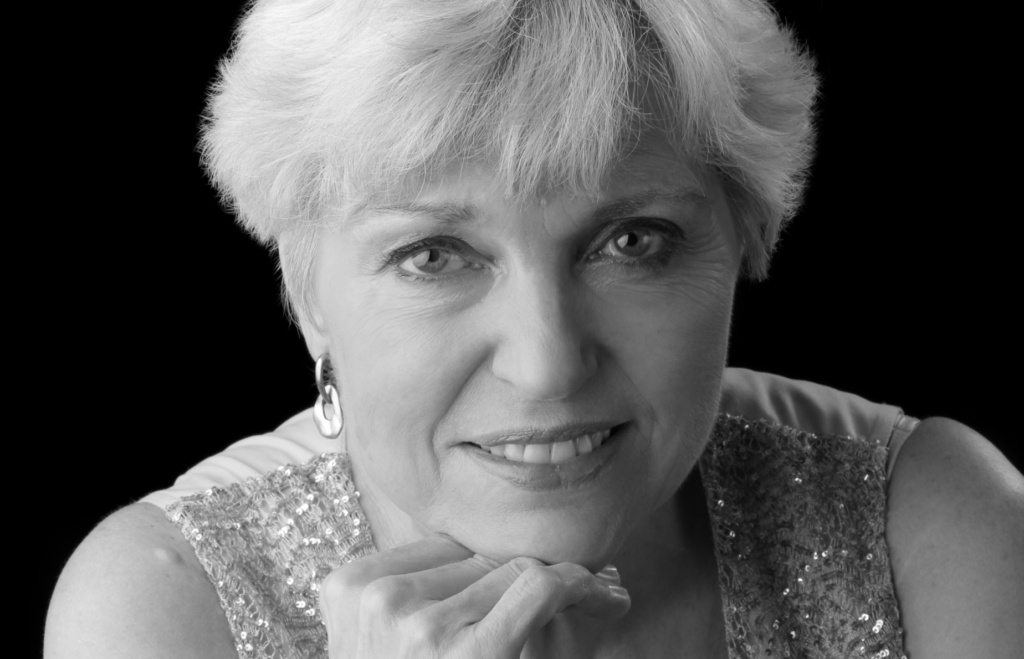
NFA High School Music Educator of the Year Award Winner Bonnie Blanchard
Congratulations on being the very first recipient of the National Flute Association’s High School Music Educator of the Year Award! What was your immediate reaction when you learned that you had received this historic honor?
I was so excited to learn I was the first recipient of this award. I am grateful and honored to be recognized after my 50 years of teaching.
What do you hope this new award will communicate about the importance of music educators who work with young musicians?
I felt gratified to learn of this new award as it meant recognition of the work we teachers “in the trenches" do. Solo performers and college teachers have name recognition, big careers and big reputations, but it is we who teach grade school through high school students who build our students from the ground up. We bake the cake and the college teachers get to frost it.
I pride myself on taking students who can barely get a sound and who know nothing about music or musicality and teaching them, baby step by baby step, until they are skilled enough to go to a conservatory if they so wish.
When you think about this recognition, do you see it as an award for your own work, or as an award that belongs in some way to your students, colleagues, mentors, and community?
I have always learned from my students. Together, we have worked with many of the top performers and teachers in the country when they come to Seattle to do masterclasses and adjudicate contests. During a contest, I made it a rule to stay and listen not only to my own students but to most of the other students and take notes. Thus, I feel that my teaching is a compilation of years of learning from the masters, and I am grateful to them for sharing their knowledge.
I have written two books that attempt to continue that tradition. “Making Music and Enriching Lives, a Guide for All Music Teachers” helps and encourages teachers of all instruments. My second book, “Making Music and Having a Blast! A Guide for All Music Students” gives students tools for efficient and fun learning. Both books are like sitting down with me for personal conversations and advice. I have just begun teaching online lessons so I can reach more teachers and students.
What do you hope this new award will communicate about the importance of music educators who work with young musicians?
I felt gratified to learn of this new award as it meant recognition of the work we "teachers in the trenches" do. Solo performers and college teachers have name recognition, big careers and big reputations, but it is we who teach grade school through high school students build our students from the ground up. I pride myself on taking a student who can barely get a sound and who knows nothing about music or musicality and teaching them baby step by baby step until they are skilled enough to go to a conservatory if they so wish. We bake the cake and the college teachers get to frost it.
What first inspired you to become a music educator? Was teaching always part of your vision as a musician?
I first started playing flute when I was nineteen. It was such a thrill to play such a beautiful instrument, and I just fell in love with it. In my first year of private lessons, my teacher Dorothy Bjarnason and her talented cellist daughter and I would play the Haydn London Trios. Dorothy would get out the music and also a box of tissues because I would become overwhelmed and sometimes tear up with pleasure. I remember that feeling of discovery and joy and wanted to bring that to others. Now I exclaim as I teach my students, “Wasn’t that beautiful? Isn’t this fun?” even if it is something as simple as “Lightly Row”.
How has your philosophy of teaching evolved throughout your career?
Looking back, I can see that my teaching has evolved over three phases. Initially, I just wanted my students to play the flute well. Over the years that goal expanded into teaching them to know about music history, theory, musicality and the classical music repertoire so they could become rounded musicians for life, not just flute players for the present. But now, my ultimate goal is to change lives. The flute is the perfect vehicle to teach self-confidence, a growth mentality, a love of learning, resilience, communication and so many more valuable life skills.
You have been described as a teacher whose creativity and enthusiasm inspire students who truly love music. How do you cultivate that sense of joy in your students? How important is humor in your studio or classroom?
I try to teach using many different approaches to engage my students and make learning fun. Here are some of the things I have done:
I have taken my students to the opera to see the Magic Flute; we had a movie night with pizza and ice cream where we watched the movie Fantasia; I had the flutist from the Lion King bring all her flutes to the studio; when some students played a tango quartet they took tango lessons; every Mother’s Day for years we had ensemble concerts complete with funny skits and a potluck; we played the Pachelbel Canon on pop bottles; and we made paintings of our feeling while listening to a symphony.
In the studio, I use funny You-Tube videos like goats singing Christmas carols. There are cartoons on the music stand and I have a variety of silly buzzers and buttons. A big stuffed Pooh Bear sits in the corner and the kids dress him according to the current holiday or season. And watch out for the creepy hands and crawly spiders at Halloween.
I have also created almost 100 music games to play as a studio. People learn better when they are having fun.
The undertaking I am most proud of was creating summer flute camps for my studio. For decades we went to a mountain or a lake retreat for four days to study with master teachers, play games and bond as a studio. This was a massive effort but produced massive results.
How do you balance teaching fundamentals—tone, technique, intonation, articulation, rhythm—with developing individuality and artistic expression?
As in life, it is not all fun and games. I leave no stone unturned in music and flute fundamentals. You have to practice to be in my studio. There is a standard to work hard and do your best; then it can be fun.
How do you help students discover their own musical voices rather than simply trying to sound like their teacher?
When students first start, they are like parrots. I play and they imitate. Later I teach them the rules of musicality, they learn how and where to apply them, and then internalize them. But as students become more advanced, I give them more choices and let them find their own voice. When they have a solid foundation then they can experiment.
To encourage students to use nuance, we play some etudes as though they were cadenzas. On YouTube, they listen to good/bad flutists (those who play technically well but not musically) and they compare those performances with good/good musicians who bring the piece to life.
When appropriate in solo pieces, I let them choose their dynamics and breathing and allow them to play them, even if it is not what I would choose. I encourage them to make up words to a phrase and stories to a section. We practice playing different moods on just one note. We listen to simple vocal songs and try to mimic the words with our tone and vibrato and timing. Good players play all the suggestions that the composer has written, better musicians add their own nuance, even better musicians make the audience feel the mood of the piece, but the very best musicians feel it themselves and share it with the audience. We don’t want to play the flute; we want to play music.
How do you approach students who are struggling, discouraged, or lacking confidence?
Many of my students come in like wallflowers; together we transform them into butterflies. I begin by telling them to speak loudly and look at me when they speak. Sometimes I have them tell me a joke every lesson to break the ice. Then we practice flute posture: put all your fingers on the flute, put the flute over your head with your elbows at your ears then bring the flute down to perfect playing position. We practice walking to the music stand with confidence and purpose. We work on announcing their name and the piece they will play and very importantly, the bow and genuine smile at the end of the performance.
I let my students know about my personal journey too. When Covid started, I decided to start playing violin. All my violinist friends said, "Wow, you are brave." I don't know if it was brave or foolish, but I study with a very exacting teacher and practice a couple of hours each day. Learning the violin is very humbling and I share my struggles and exasperation about learning both the flute and violin with my students. They know how hard I work and I think it spurs them on to do the same.
What do you think your students would say is distinctive about studying with you?
I base my teaching on relationships. I truly love my students and sometimes when I talk about “my kids” people may wonder how many times I’ve been pregnant! We spend part of each lesson talking and I share my life stories with them and ask about their lives.
When students know you really care about them and you make the lessons fun, then you can find the right balance of pressure and support.
What do you tell students when they experience disappointment, such as not winning an audition or competition
Winning is wonderful, but the point of competitions is the preparation. No one wins everything. Even Mozart couldn’t get a full-time job. Though you have prepared well, you may bring your best-polished apples to the judge only to find out that they were looking for oranges. After a disappointment we review comments to see what we can learn then set our sights on the next project.
Is there a particular lesson or principle that you find yourself returning to again and again with students
Many teachers say, “I am just an average teacher and I have average students.” That is a self-fulfilling prophecy. When a student walks through my door, I believe that they will become a superstar. Why not? If I teach them the basics and if they trust me and practice and use my practice methods, they will be great. I have had several students who struggled for a very long time and now they are professionals. I believe in myself as a teacher and I believe in their capabilities Together, with a lot of very hard work, it’s magic!