Why Musicians Need More Than Performance
by Zhanar Abay
For generations, musicians have been taught to pursue excellence through years of practice, formal education, competitions, auditions, performances, and teaching. We learn how to perfect our sound, interpret repertoire, communicate from the stage, and dedicate ourselves completely to our craft.
But there is another question we are rarely taught to ask:
Where can I actually go with all of this?
For me, this question was not an abstract one. It came directly from my students.
I remember working with young musicians, encouraging them to practice for hours, to develop their artistry, to believe in themselves, and to imagine a meaningful future in music. As a teacher, I was constantly speaking to them about the beauty of this profession and encouraging them to invest deeply in their craft.
And then one day, they asked me:
“Where can we go to work?”
I have to admit, this question stopped me.
It was a simple question, but it made me look at something I had perhaps been taking for granted. I was encouraging my students to work harder, become better musicians, and prepare themselves for a professional future. But what exactly were we preparing them for?
When I looked at the professional landscape honestly, I realized how complicated the answer had become.
The traditional musical world remains incredibly valuable. Orchestras, universities, conservatories, and music schools continue to provide meaningful careers and preserve an essential part of our cultural life. But the number of positions is limited, while the number of highly educated and talented musicians competing for them is growing.
At the same time, young musicians are looking at a completely different professional world.
They see people of their own generation building careers online, developing digital skills, creating content, teaching remotely, launching businesses, working internationally, and sometimes earning significantly more than they could expect from a traditional entry-level position in the arts.
And this creates a very real question:
If I am going to spend 15 or 20 years becoming an excellent musician, will this path allow me to build the life I want?
I found this question deeply troubling — not because I believe that long-term musical education has lost its value, but because I believe we need to rethink what we prepare musicians for.
The answer cannot simply be to abandon classical music or traditional musical education.
Perhaps the answer is to expand the possibilities available to musicians.
The traditional path should not disappear. But it should no longer be the only path we teach young musicians to imagine.
This realization became one of the foundations of the Musician Entrepreneur Club (MEC).
MEC emerged from a desire to create a bridge between generations of musicians — between those who are still searching for their professional direction and those who have already traveled a meaningful part of their own journey.
At its heart, MEC is more than a professional community.
It is a community of people who have found their own place in the musical world.
And those places look very different.
Some musicians build their careers on the concert stage. Others discover themselves through teaching, entrepreneurship, interdisciplinary projects, cultural leadership, education, media, or by creating their own organizations and initiatives.
There is no single formula.
That is precisely why experience matters.
Every person in MEC brings a different story. Someone may have spent decades performing. Someone else may have built a successful teaching studio. Another person may have created a festival, developed an educational project, built an international network, or discovered a completely new way to combine music with other professional skills.
These experiences are valuable because they cannot always be learned from a textbook.
They can, however, be shared.
Instead of simply telling young musicians, “Work hard and everything will work out,” we can show them different possibilities.
We can say:
Here is the path I discovered. Here is what I learned. Here are the mistakes I made. Here are the opportunities I found. Now, find your own path.
This is where the idea of the Musician Entrepreneur becomes meaningful.
A Musician Entrepreneur is not someone who chooses business over art. It is an artist who understands that their creativity, knowledge, experience, relationships, and ideas have value — and learns how to build opportunities around them.
Entrepreneurial thinking does not have to diminish artistry.
It can actually protect it.
When musicians understand their value, communicate their identity, develop professional relationships, create projects, and become financially aware, they gain more freedom to continue doing the work they love.
At MEC, we explore entrepreneurship, personal branding, networking, communication, financial awareness, leadership, creativity, and professional growth. But all of these elements are built on something even more important: human connection and the exchange of experience.
A conversation can become a collaboration.
A personal story can change the way a young musician sees their future.
A professional connection can open a door that someone did not even know existed.
And a musician who once struggled to find their own path can eventually become the person who helps someone else find theirs.
This is the culture I want MEC to cultivate.
Not a community where everyone follows the same career formula, but a community where musicians can discover that there are many ways to build a meaningful life in music.
I believe the future belongs to musicians who can combine artistry, entrepreneurial thinking, and community.
Our artistic excellence remains at the heart of everything we do. The hours of practice matter. Education matters. Tradition matters. The stage matters.
But so does the life we build around our art.
Perhaps the question we should be asking young musicians is no longer only:
“How can you become the best musician you can be?”
Perhaps we should also ask:
“What kind of life can you create with the musician you have become?”
For me, this is where the conversation begins.
Because being a musician is not only about performing music.
It is also about finding your own place in the world of music — and helping others find theirs.
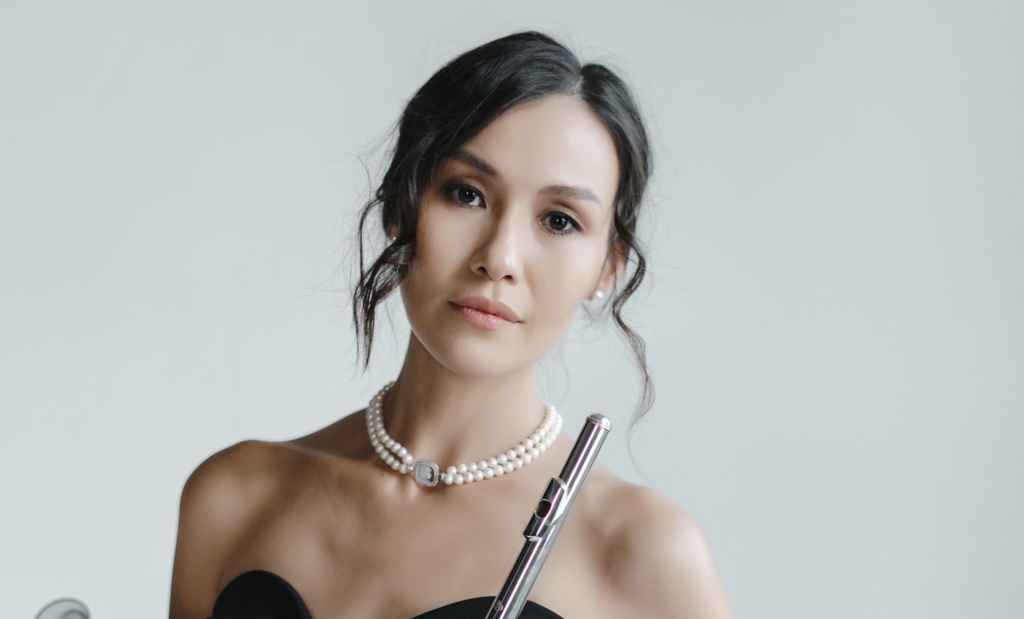
Zhanar Abay Zheltyrguzov is a Kazakhstani flutist celebrated for her artistry in classical performance and her distinguished career in music education. A senior flute teacher at the Kazakh National University of Arts, she has shaped generations of musicians through her deep commitment to pedagogy and her mastery of flute performance techniques.